


Types of Antique Necklaces: A Guide to the Types of Gold Chains
For over 20 years, we’ve been trading in antique jewellery, and in particular antique necklaces, we’ve seen a huge number of different types and styles that are a testament to the creativity and skill of jewellers throughout the ages.
Antique necklaces come in a wide variety of styles, including chain necklaces, pendant necklaces, lockets, tennis necklaces, rivière necklaces, and more decorative forms like festoon, fringe, and negligee necklaces. Each style reflects the craftsmanship and aesthetic values of its era - from heavy Georgian gold chains to delicate Edwardian lavalieres
This guide covers every major type of antique necklace, helping you identify, understand, and choose the right style for your collection.
Antique Necklace Summary
| Necklace Type | Key Feature | Associated Era |
| Cable Chain | Uniform oval links | All eras |
| Belcher Chain | Heavy gold links | Victorian (1837–1901) |
| Albert Chain | Holds pocket watches | Victorian (1837–1901) |
| Georgian Chain | Barrel-shaped links | Georgian (1714–1837) |
| Bead Necklace | Strung gemstones or pearls | All eras |
| Locket | Opens to hold photos | Victorian (1837–1901) |
| Tennis Necklace | Continuous gemstone links | Modern / post-1987 |
| Rivière | Graduated gemstone row | Georgian–Victorian |
| Lavaliere | Fixed pendant in chain | Edwardian (1901–1910) |
| Negligee | Two uneven droppers | Edwardian / 1920s |
| Fringe | Graduating pendant array | Victorian–Edwardian |
| Festoon | Draped chains and swags | Georgian–Edwardian |
| Collar/Choker | Sits high on neck | Victorian / Art Deco |
What Are the Different Types of Antique Chain Necklaces?
Antique chain necklaces are decorative neckpieces made from linked metal chains that are typically at least 100 years old and valued for their historical craftsmanship, unique design, and collectible appeal. They were commonly crafted from materials such as gold, silver, platinum, or brass and often feature intricate handwork, period-specific styles, and details that reflect the fashion trends of eras like Victorian, Edwardian, or Art Deco. Unlike modern mass-produced jewelry, antique chain necklaces are appreciated for their individuality, durability, and cultural significance, making them popular both as wearable accessories and as investment or heirloom pieces.

Which Chain Types Are Best for Everyday Wear?
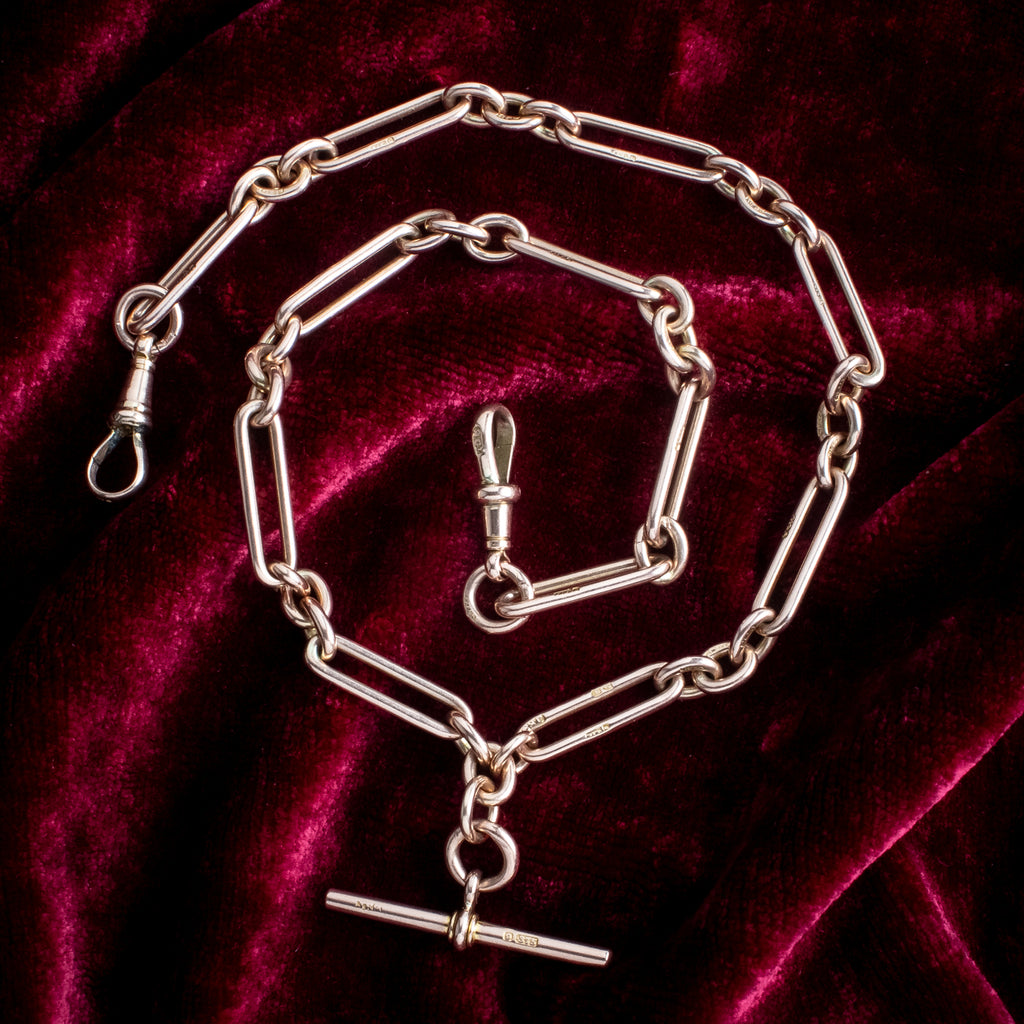
For those looking to wear an antique necklace daily, curb chains and belcher chains tend to be the most durable options due to their heavy-gauge links and flat-lying construction. Snake chains and box chains, while elegant, are better suited to occasional wear as their fine links can be more susceptible to kinking or breaking under regular use.
Most necklaces are based around a chain of some kind, but the type and arrangement of chains can vary considerably. Cable chains are the most common and easily recognisable, with an array of identical links. Curb chains are similar, but the links are twisted so that the chain can lie flat against the skin. Snake chains are fashioned from a great number of fine links that interlock in a seamless way to mimic the appearance of snake skin.
More elaborate chains include the figaro chain, a mixture of short and long links, anchor chains, which have a supporting bar in the centre of each link for added strength, and box chains, which have squared links rather than oval or circular.
Which Antique Chain Styles Are Era-Specific?
Some chains are specific to the era in which they were produced. Albert chains, made to hold pocket watches, were common in the Victorian era and are still popular today even if they are no longer used for the same purpose. Georgian necklaces (circa 1714–1837) are crafted from barrel shaped links that appear to be more substantial than they are, which was a reaction to the scarcity of gold at the time. Belcher chains are amongst the most substantial of antique chains, crafted from heavy gold links, and rumoured to have acquired their name from the bare knuckle boxing champion James Belcher, who fought in the early 1800s and favoured these types of gold chains.
View our complete antique gold chain necklace collection.
What Are Antique Bead Necklaces and What Are They Made From?
Antique bead necklaces are decorative necklaces made from beads that are typically over 100 years old and valued for their historical, cultural, and craftsmanship significance. These necklaces can feature beads made from materials such as glass, amber, coral, bone, gemstones, metal, clay, or trade beads, often handcrafted using traditional techniques from regions including Africa, Asia, the Middle East, and Europe. Collectors and jewellery enthusiasts prize antique bead necklaces for their unique character, patina, rarity, and the stories they reflect about past societies, trade routes, fashion, and ceremonial practices.
What Stones and Materials Are Used in Bead Necklaces?
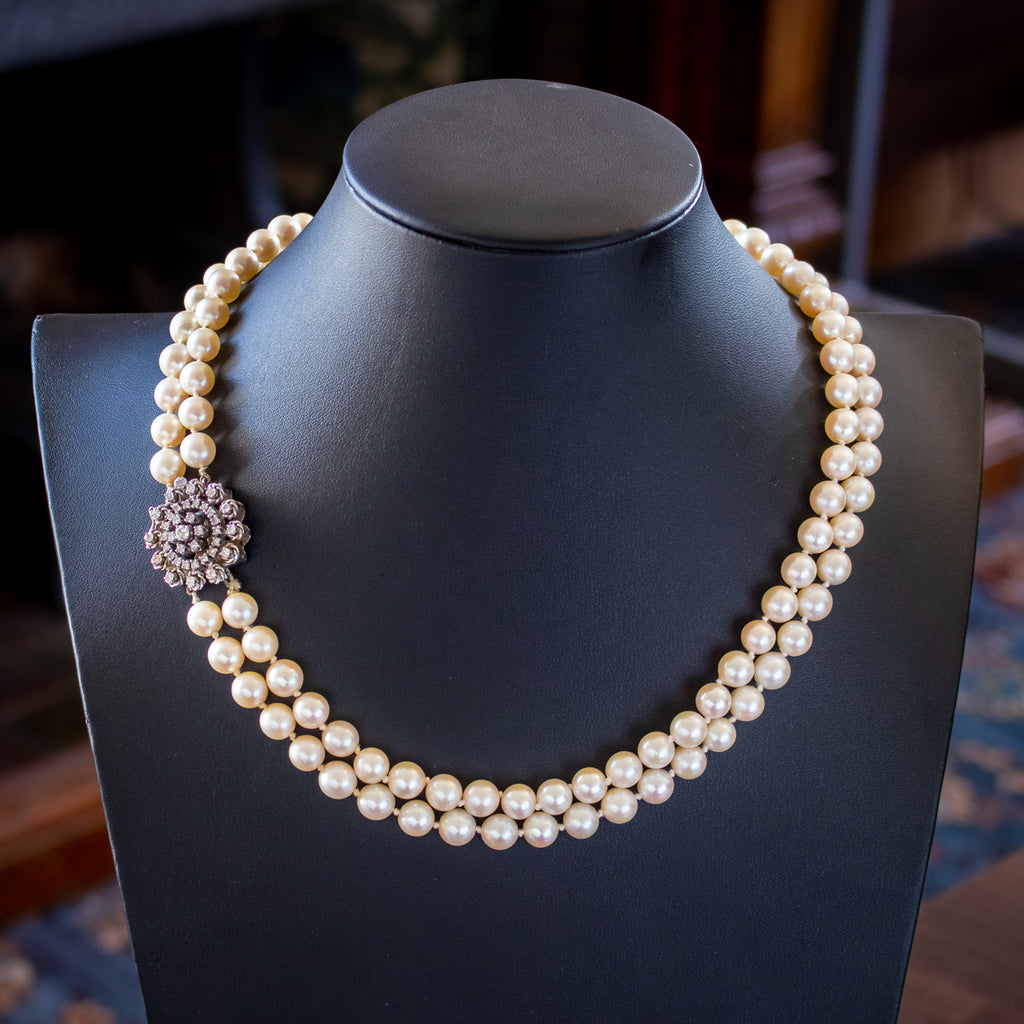
Some of the most valuable and extravagant necklaces have only a small amount of chain around their clasp, or on occasion only a thread that is strung with beads of precious gems. Pearl necklaces are the most common, either strung with uniform pearls or with steadily graduating size culminating in the largest as a centrepiece.
Although pearls naturally work well for these kind of necklaces the beads can be made of many other precious stones. Jade, coral and opal all bring a unique beauty to the form.
How Are Bead Necklaces Typically Worn?
Bead necklaces are often longer than chain necklaces, and are intended to be worn as multiple layers, wrapping the neck many times to further accentuate the luxury of the piece.
Choosing an antique bead or pearl necklace is also an increasingly popular sustainable choice - buying antique jewellery gives a beautiful piece a new life, reducing the demand for newly mined gemstones and newly refined metals.
View our antique pearl necklace collection to explore a curated selection of strands and graduated pieces.
What Is a Pendant Necklace and What Styles Are Available?
How Simple or Elaborate Can a Pendant Necklace Be?
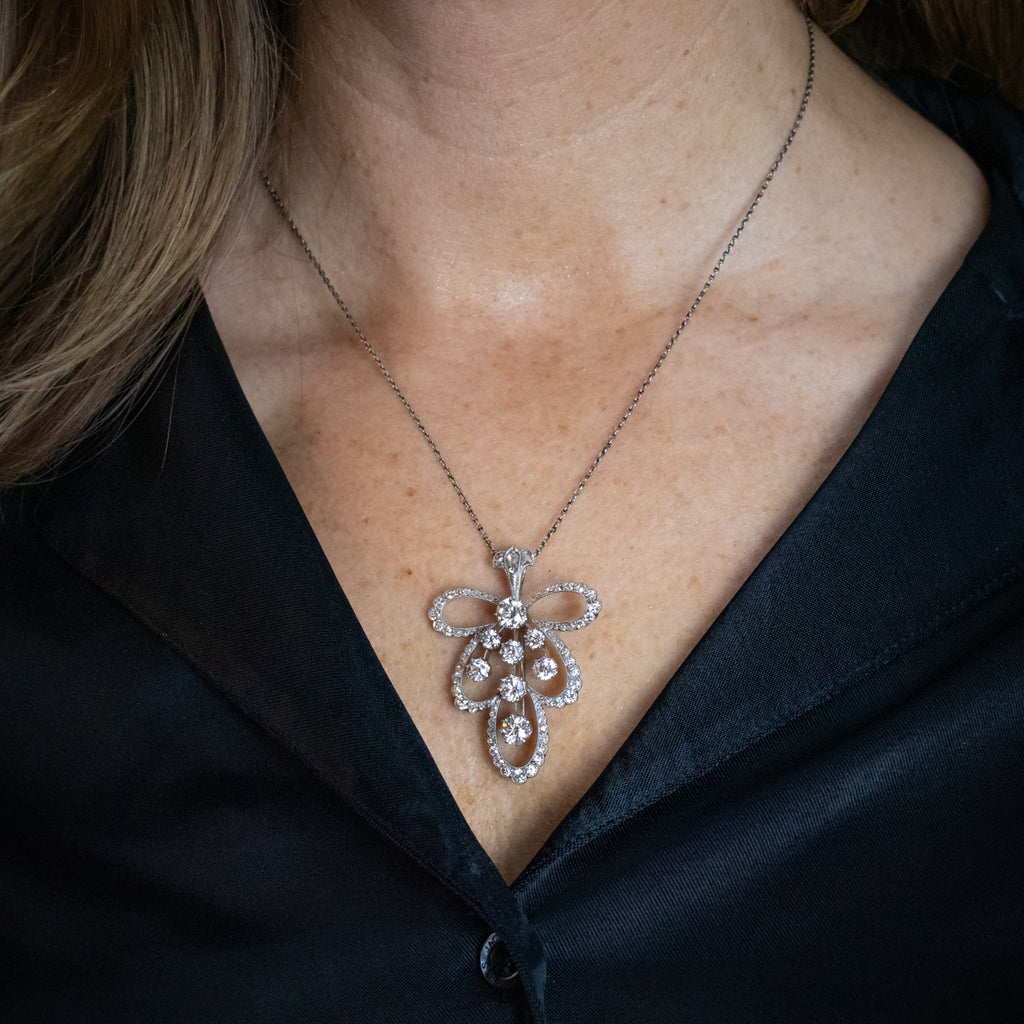
The most common type of necklace is a simple combination of a chain and a pendant, although there are countless types and styles of pendant. A pendant can be as simple or elaborate as the wearer wants. Single stone solitaire pendants, designed to showcase a particularly magnificent stone on its own, are minimal yet no less beautiful than intricate arrangements of wirework and engraved precious metals.
Can Pendants Have Personal or Cultural Significance?
Pendants can have religious or cultural significance, in the form of crosses or other holy symbols, or they can hold a more personal meaning that is tailored specifically to the wearer. Charms are most widely known as components of charm bracelets, which have many, but a single charm is often worn as a pendant.
View our complete antique pendant necklace collection.
What Is a Locket Necklace and How Were They Used?
What Shapes and Styles Do Antique Lockets Come In?
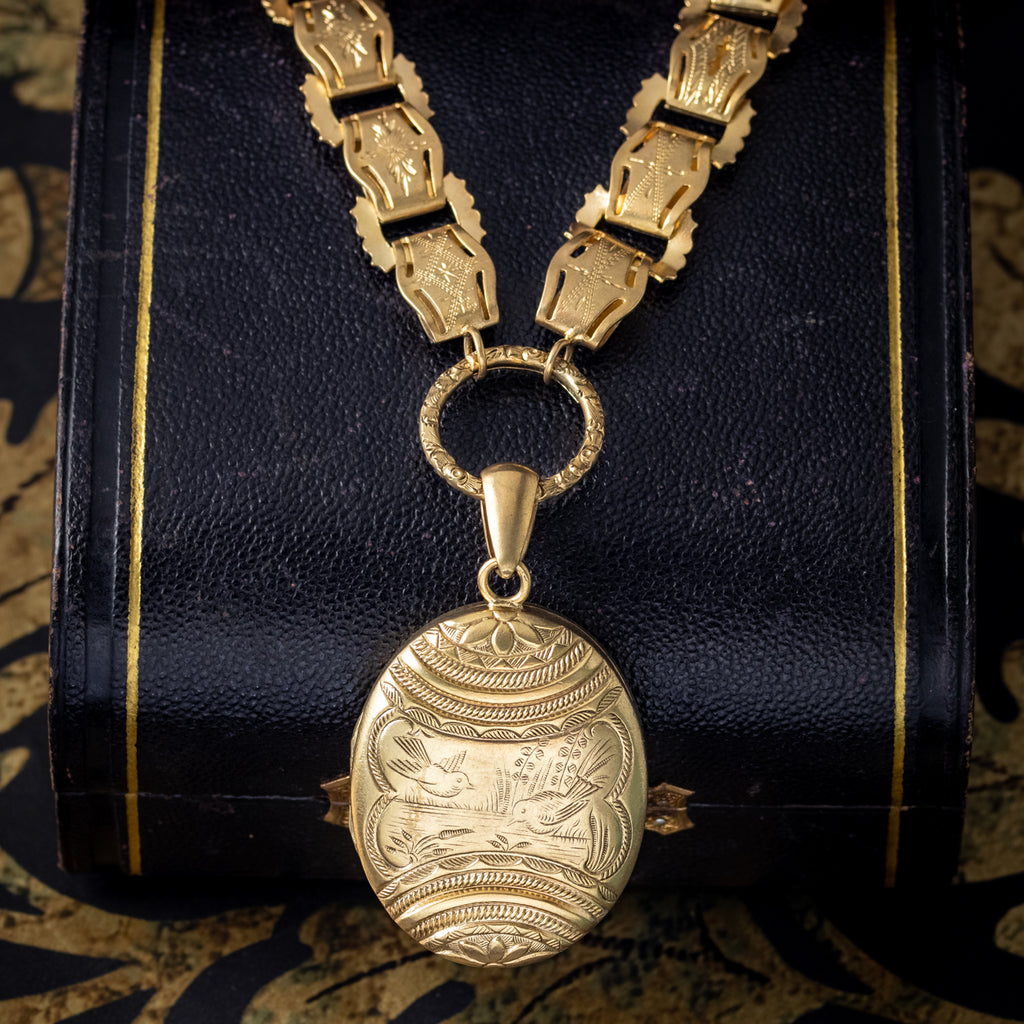
Arguably the most popular type of pendant necklaces, locket necklaces are designed to hold a picture of a cherished loved one, come in a variety of shapes and sizes. The most common tend to be oval or heart shaped, a fitting shape given that they tend to contain images of a person’s most beloved family members or friends. Lockets can be plain, polished silver or gold, but many antique lockets are engraved with elaborate designs, and may even include inlaid precious stones.
Are Locket Necklaces Still Popular Today?
Lockets are experiencing a notable resurgence in popularity, with a new generation of jewellery buyers drawn to their sentimental value and the growing trend for personalised, meaningful pieces. Antique lockets in particular are highly sought after for their superior craftsmanship and the unique history each piece carries.
View our complete antique locket collection.
What Is a Tennis Necklace and Where Does the Name Come From?
A tennis necklace is an elegant jewellery piece made up of a continuous line of individually set gemstones, most commonly diamonds or crystal stones, linked together to form a flexible and symmetrical chain worn around the neck. Known for its timeless and sophisticated appearance, the design became widely recognised after professional tennis player Chris Evert famously lost her diamond bracelet during a match, leading to the term “tennis jewellery”. Tennis necklaces are popular for both formal occasions and everyday luxury styling, offering a refined sparkle that complements a wide range of outfits.

How Is a Tennis Necklace Constructed?
In tennis necklaces every link contains a precious gemstone, creating a dazzling array of faceted stones that flex and shift with the wearer, creating a cascade of light. Due to the large number of stones it takes to create a tennis necklace they command a far higher price than other necklaces, and are a potent status symbol.
Why Is It Called a Tennis Necklace?
Their name comes from a diamond bracelet which was worn during the 1987 US Open Championship. The player Chris Evert was wearing one such bracelet and lost it during a match. Play was halted so she could find and retrieve it.
What Is a Rivière Necklace and How Does It Differ from a Tennis Necklace?
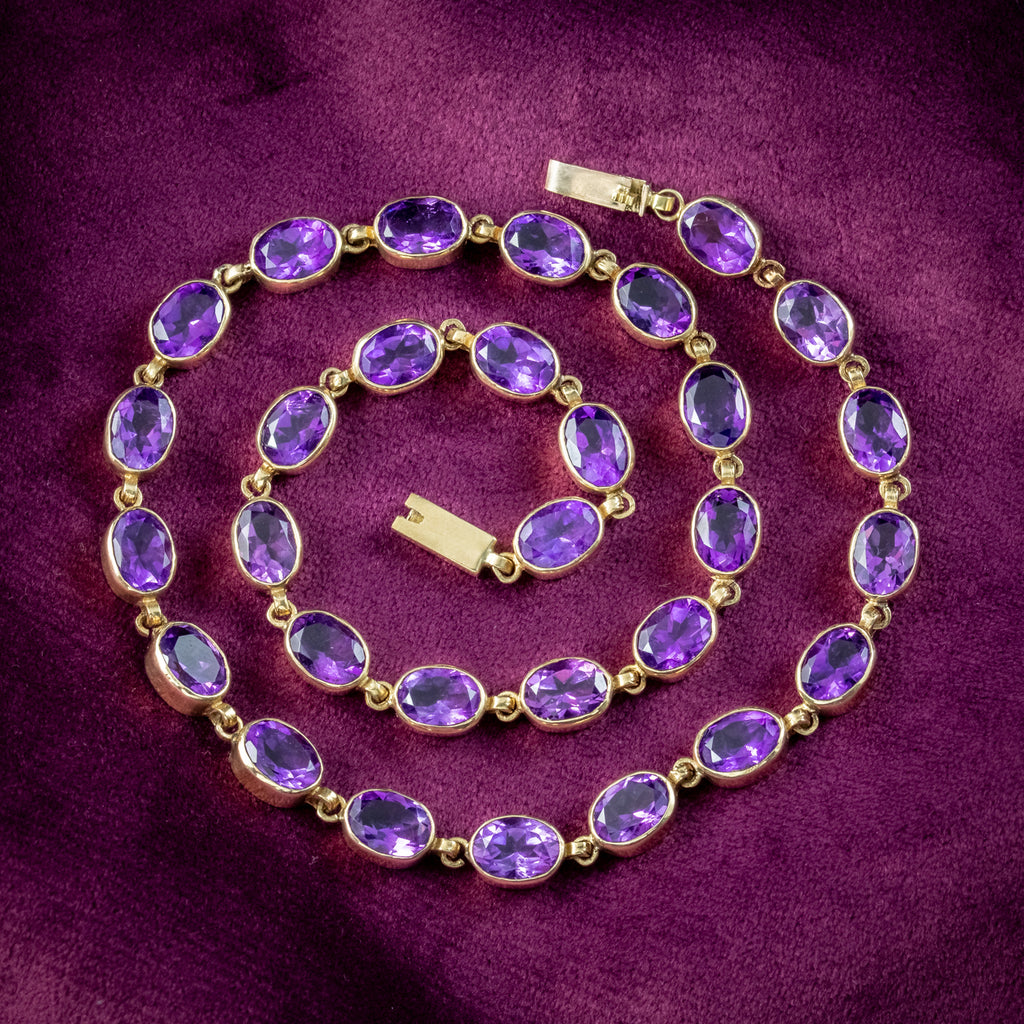
A rivière necklace is a classic and luxurious style of jewellery featuring a continuous strand of graduated gemstones or diamonds, typically arranged so the stones increase in size towards the centre of the necklace. The term “rivière”, meaning “river” in French, reflects the flowing appearance of the stones as they encircle the neckline with uninterrupted brilliance. Traditionally crafted in precious metals such as gold or platinum, rivière necklaces are associated with timeless elegance and are often worn for formal occasions, fine jewellery collections and special events.
What Makes a Rivière Necklace Distinctive?
An older form of the tennis necklace, rivière necklaces have a distinctive and elegant arrangement of individually set gemstones, traditionally diamonds or other precious stones, flowing seamlessly around the neckline to create a continuous “river” of brilliance. Considered an earlier and more formal predecessor to the modern tennis necklace, each gemstone is typically secured in its own collet or prong setting, allowing maximum light to pass through and enhance the sparkle of the stones. Many high-quality antique rivière necklaces feature old mine-cut or old European-cut diamonds rather than modern brilliant cuts. The gemstones may sit evenly in line with the necklace for a refined, symmetrical appearance, or hang slightly lower to create added depth and movement. Often designed with graduated stone sizes that become larger towards the centre, rivière necklaces are admired for their timeless sophistication, luxurious craftsmanship and graceful, fluid silhouette.
What Is a Lavaliere Necklace?
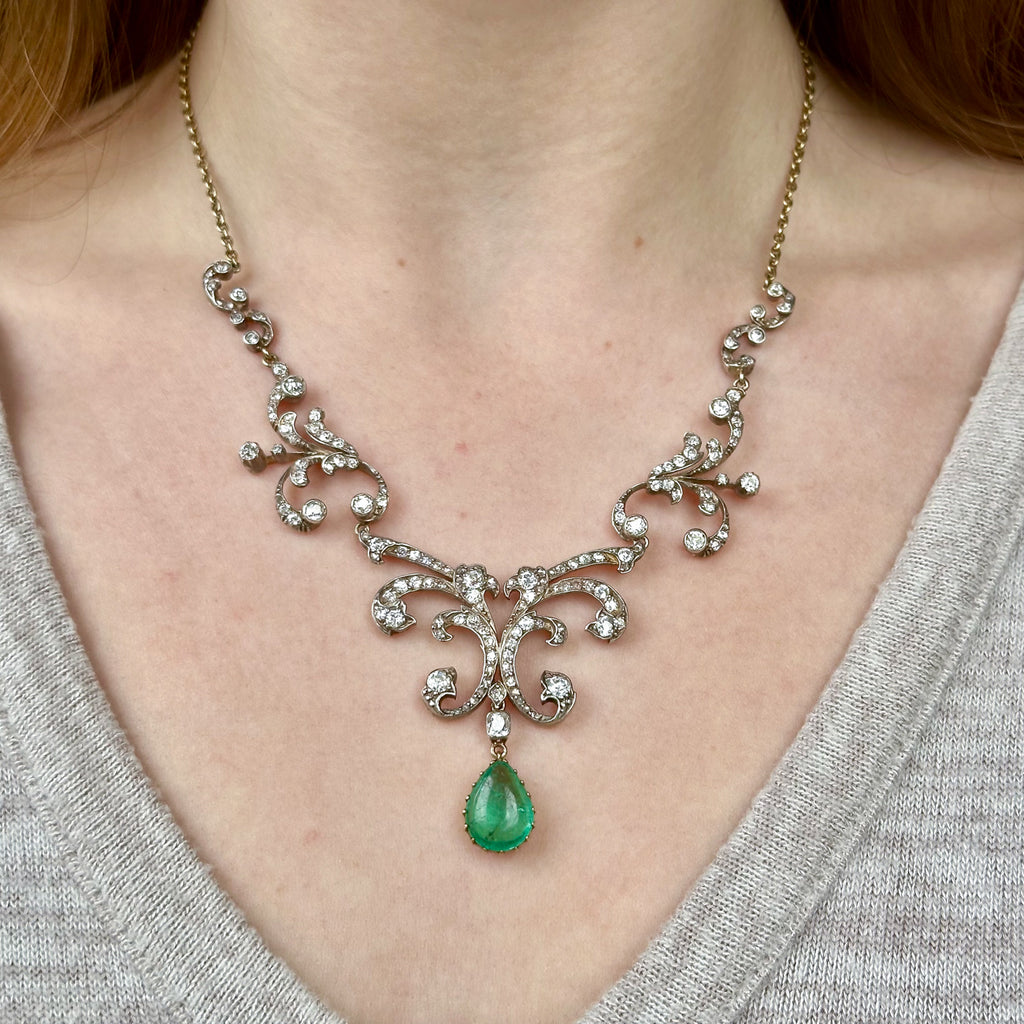
A lavaliere necklace is a delicate style of pendant necklace featuring a small ornamental pendant suspended from a fine chain, often designed with intricate detailing, gemstones or pearl accents. Originating in the late 19th and early 20th centuries, lavaliere necklaces are known for their elegant, feminine appearance and vintage-inspired charm. The pendant typically hangs from a central decorative element or short drop, creating a graceful silhouette that suits both formal and everyday wear. Commonly crafted in gold, silver or platinum, lavaliere necklaces remain popular for their timeless sophistication and understated beauty.
How Is a Lavaliere Different from Other Pendant Necklaces?
In this style of necklace a dangling pendant is built into the chain directly, rather than via a bail loop. This means that the pendant cannot move along the chain but is anchored in place. Most lavaliere necklaces have multiple, elaborate pendants built into them, and are designed to be worn only for special occasions.
View our complete Lavaliere Necklace collection.
What Is a Lariat Necklace?
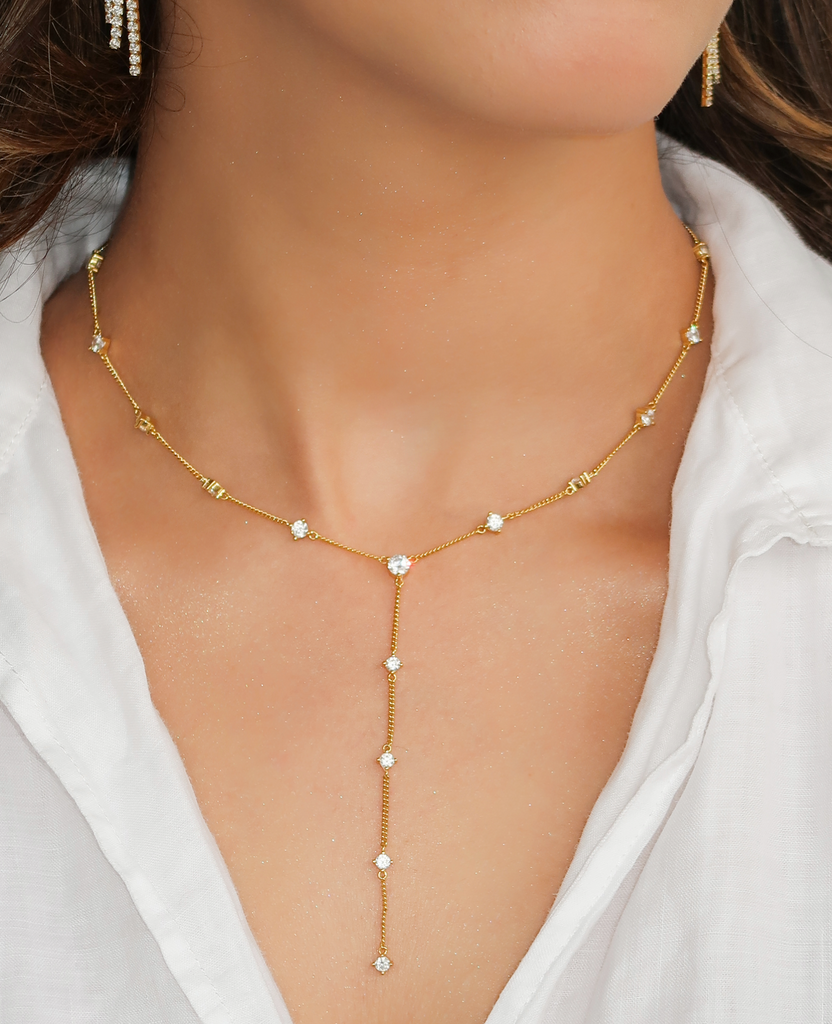
A lariat necklace is a long, open-ended style of necklace that does not typically feature a traditional clasp, instead fastening through looping, knotting or decorative drops at the ends. Recognised for its sleek and versatile design, a lariat necklace often forms a Y-shaped silhouette that creates an elegant, elongating effect when worn. Available in a variety of materials and styles, from minimalist chains to gemstone-adorned designs, lariat necklaces can be adjusted and styled in multiple ways, making them a popular choice for both contemporary fashion and sophisticated occasion wear.
Where Does the Name Lariat Come From?
These necklaces are named from the Spanish “la reata”, meaning “the rope”. They are an open-end arrangement with a single long chain which hangs from the centre and terminates in a pendant.
What Styles of Lariat Necklace Are Available?
They can be minimalist, with a single stone pendant, or extremely extravagant, with vast arrays of shining pearls. They often have a secondary stone set into the point at which the main dropper meets the body of the necklace.
What Is a Negligee Necklace?
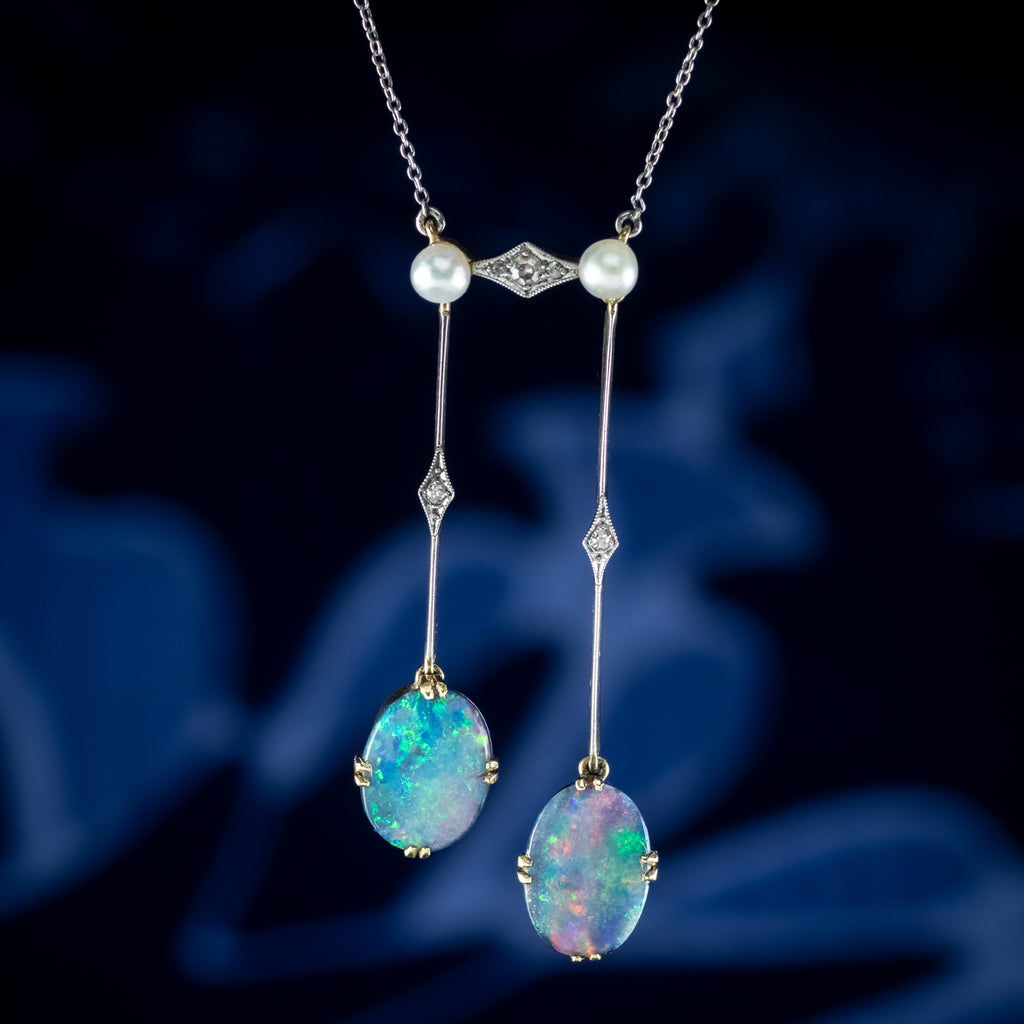
A négligée necklace is an elegant vintage-style necklace characterised by an asymmetrical design featuring two uneven pendants or drops suspended from a central chain. Popular during the late Victorian and Edwardian periods, the style is known for its delicate, romantic appearance and graceful movement. Négligée necklaces were traditionally adorned with pearls, diamonds or coloured gemstones set in fine metals such as gold or platinum, often designed to complement eveningwear and formal attire. Today, they are admired for their antique charm, feminine detailing and timeless sophistication.
When Were Negligee Necklaces Most Popular?
A popular design in the Edwardian era and during the 1920s, Negligee necklaces have two hanging droppers, one longer than the other, which hang from a central bar built into the body of the necklace.
How Is a Negligee Necklace Constructed?
The body of the necklace sits below the collarbone and the droppers can be tassels, gemstones or carved precious metal, depending on the taste of the jeweller who created the piece.
What Is a Fringe Necklace?

What Does a Fringe Necklace Look Like?
Fringe necklaces have an array of graduating pendants that spread across the front of the piece, with the longest sitting in the centre. The fringe can be composed of a series of gemstone pendants, clever arrangements of engraved gold, tassels or chain arrangements, and they can be tremendously varied. Like the Lavaliere they are not intended for daily wear, but rather for special occasions where the wearer is unlikely to be making strenuous movements that may cause the droppers to tangle.
What Is a Cleopatra Necklace?
One of the most elaborate forms of the fringe necklace is the Cleopatra necklace, named for the queen who ruled Egypt between 51 and 30 BCE. These regal arrangements consist of alternating plain and embossed slim yellow gold bars which graduate in size, with the largest sitting at the centre.
What Is a Festoon Necklace?
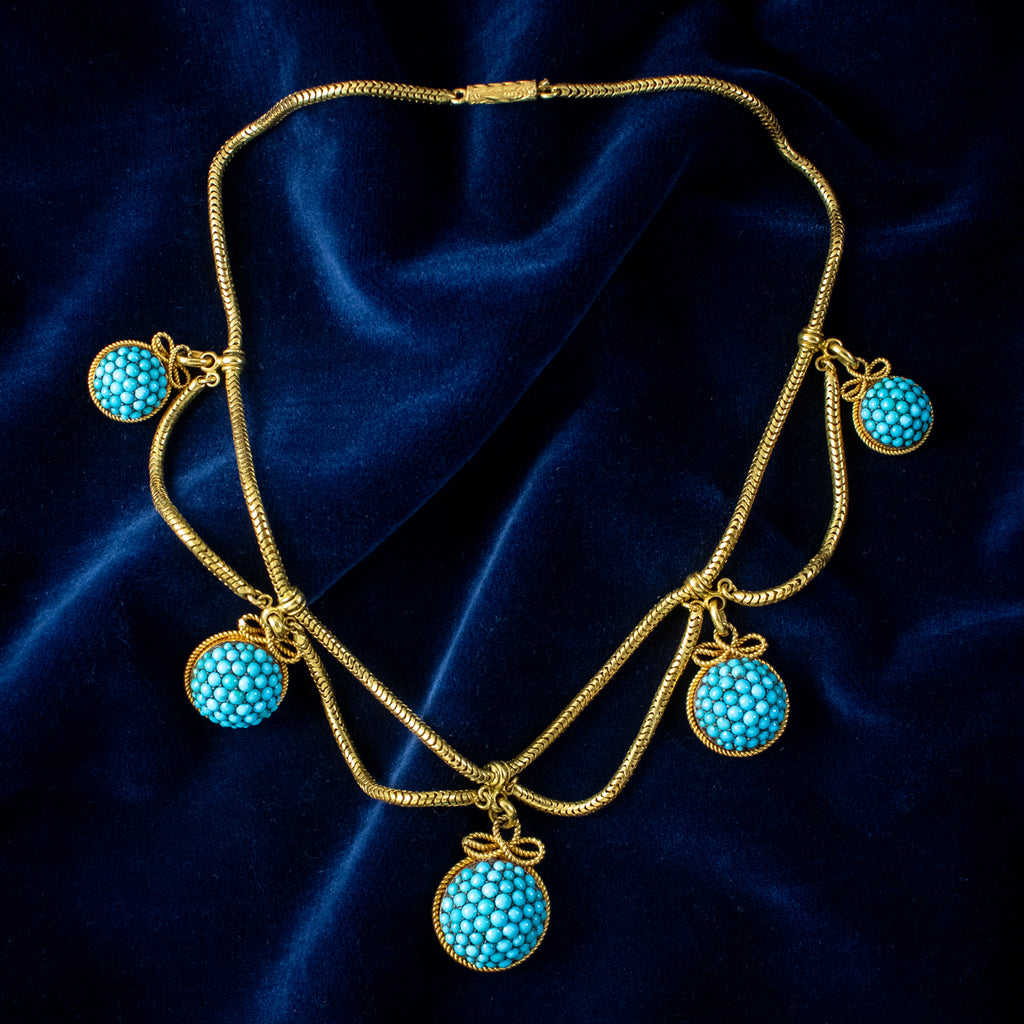
A festoon necklace is an ornate style of jewellery distinguished by draped chains, swags or garlands suspended between decorative elements along the necklace. Often associated with Georgian, Victorian and Edwardian jewellery design, festoon necklaces are known for their elegant, layered appearance and intricate craftsmanship. Typically adorned with gemstones, pearls or delicate metalwork, the design creates a graceful cascading effect across the neckline, making it especially popular for formal occasions and vintage-inspired fashion. Festoon necklaces are valued for their timeless sophistication, romantic detailing and luxurious aesthetic.
What Makes a Festoon Necklace Unique?
These highly ornate necklaces feature numerous interlinking chain, bead and gemstone elements that can be extraordinarily intricate. They are named from the latin “festo”, meaning a garland of flowers. Festoon necklaces can vary tremendously in the number of elements and connections, with a great variety of styles and types available.
What Is the Difference Between a Collar and Choker Necklace?
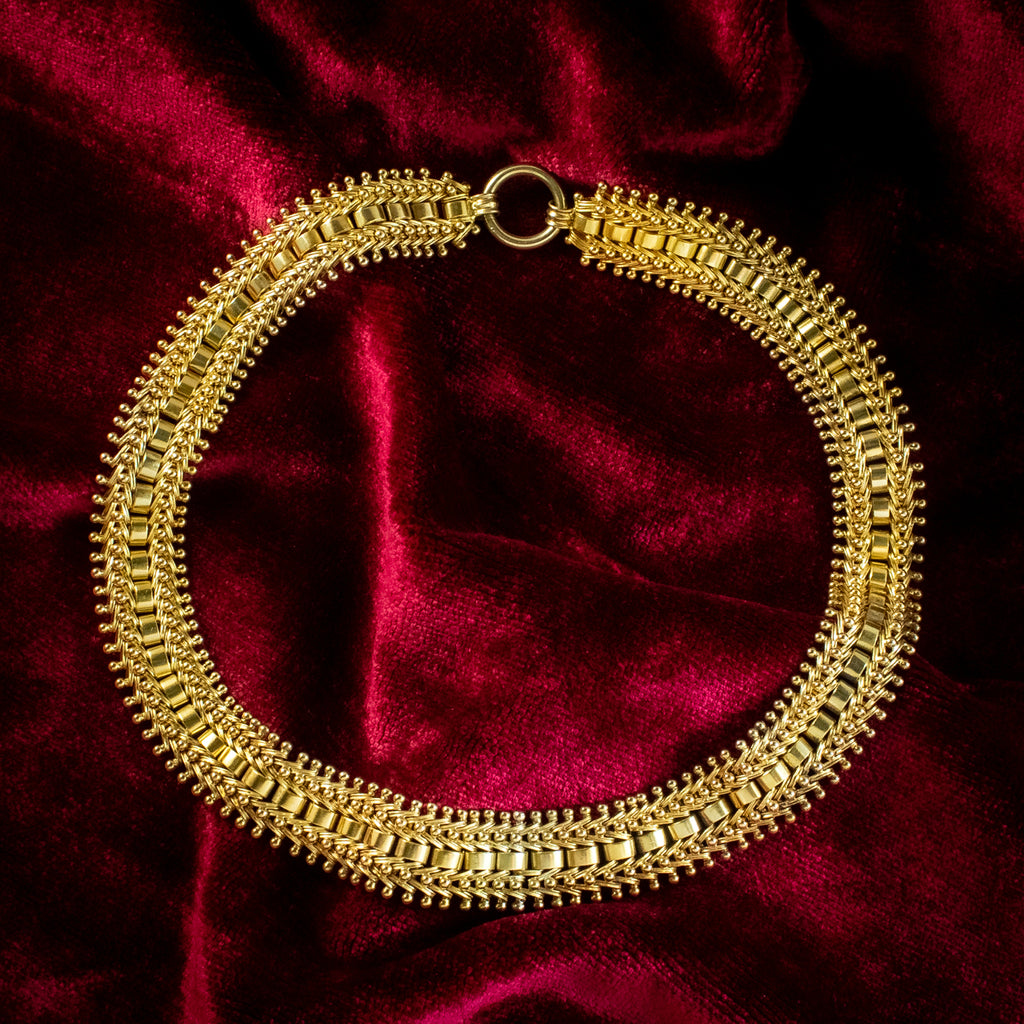
Collar necklaces have roots stretching back to ancient Egypt and have appeared across many eras, experiencing a significant revival during both the Victorian (1837–1901) and Art Deco (1920–1940) periods.
How Is a Collar Necklace Worn?
Collar necklaces are worn high on the neck with no dropper elements. Instead the focal points of such necklaces are built in line with the design itself. They are typically quite broad, which allows them to hold their position, and can vary between simple bands and ornate arrays of gemstones and faceted links.
What Is a Choker Necklace?
The tightest-fitting collar necklace is known as the choker. Chokers sit directly against the throat and were particularly fashionable during the Victorian era (1837–1901), often worn by royalty and aristocracy as a statement of elegance.
View our hand-picked selection of antique chains and necklaces. We have options from vintage necklaces to Georgian necklaces to art deco necklaces for sale - so are sure to have something for your style!
Looking for more information about the different types of gold chains? Our friendly staff are always happy to help. Contact us on enquiries@antiquejewellerygroup.com or via telephone on England: 0333 700 4500. We look forward to hearing from you!
Frequently Asked Questions About Antique Necklaces
What is the most popular type of antique necklace?
Locket necklaces and pendant necklaces are among the most popular antique necklace styles. Lockets have enduring sentimental appeal, while pendant necklaces offer versatility across every era of jewellery history.
How do I identify what type of antique necklace I have?
To identify an antique necklace, begin by examining the link construction, clasp type, gemstone cuts, and any hallmarks. Hand-cut diamonds, tube box clasps, closed-back settings, and hand-soldered links can all indicate earlier manufacture. Victorian necklaces often use heavier yellow gold, while Edwardian examples typically feature finer platinum workmanship and lighter, lace-like designs.
What is the rarest or most valuable type of antique necklace?
Value depends heavily on the gemstones, metal purity, age, maker, and condition. However, fine rivière necklaces featuring old-cut diamonds or sapphires, and Georgian-era festoon necklaces, are among the most sought-after and valuable antique necklace types at auction.
In today’s collector market, provenance, original condition, and period-correct gemstone settings can significantly influence value. Necklaces retaining their original clasps, fitted presentation boxes, or documented maker attribution often command substantially higher prices.
What does "antique" mean when it comes to necklaces?
In the jewellery trade, a piece is generally considered "antique" if it is over 100 years old. Pieces between 20–100 years old are typically classified as "vintage." Both categories are distinct from modern reproduction or period-inspired jewellery.

