
Semi-Precious Stones – A Guide for Buyers from Laurelle Antique Jewellery
At Laurelle Antique Jewellery, for over 20 years, we have regularly handled semi-precious gemstone jewellery dating from the Georgian, Victorian, Edwardian and Art Deco periods. One of the most fascinating aspects of antique coloured stones is how differently they were cut before modern gem-cutting techniques prioritised mathematical precision over individuality and character.
Semi-precious gemstones include a wide range of minerals such as amethyst, garnet, opal and aquamarine. Although traditionally considered less rare than diamonds, rubies, sapphires and emeralds, many semi-precious stones are highly durable, visually striking, and historically significant in antique and modern jewellery.
Often referred to as “alternative” or “secondary” gemstones, they include a broad variety of minerals such as Topaz, Tourmaline and Aquamarine. While generally more affordable than precious gemstones, many semi-precious stones are valued for their colour, versatility and long history of use in jewellery design.
This guide explores 17 of the most significant semi-precious gemstones, explaining what they look like, what makes them valuable, and how they have been used in antique and vintage jewellery.
Semi-Precious Stones Comparison
| Gemstone | Mineral Family | Typical Colours | Mohs Hardness | Key Optical Feature | Common Antique Jewellery Use | Durability for Daily Wear |
|---|---|---|---|---|---|---|
| Agate | Chalcedony (Quartz) | Banded multicolour | 6.5–7 | Swirls and banding | Scottish brooches, beads, seals | Very good |
| Aquamarine | Beryl | Pale blue to blue-green | 7.5–8 | High clarity and brilliance | Art Deco rings, pendants | Excellent |
| Amethyst | Quartz | Lavender to deep purple | 7 | Rich violet saturation | Victorian rings, brooches | Very good |
| Carnelian | Chalcedony (Quartz) | Orange-red to brown-red | 6.5–7 | Warm translucent glow | Intaglios, seals, fobs | Very good |
| Chalcedony | Microcrystalline Quartz | White, green, blue-grey | 6.5–7 | Waxy translucence | Carvings, cabochons | Very good |
| Citrine | Quartz | Golden yellow to amber | 7 | Bright vitreous sparkle | Victorian earrings, rings | Very good |
| Garnet | Silicate Group | Red, green, orange | 6.5–7.5 | Deep brilliance | Victorian mourning jewellery | Excellent |
| Jade | Jadeite / Nephrite | Green, white, lavender | 6–7 | Smooth waxy lustre | Carved pendants, beads | Good |
| Moonstone | Feldspar | White, blue, peach | 6–6.5 | Adularescence | Art Nouveau jewellery | Moderate |
| Opal | Hydrated Silica | White, black, fire orange | 5–6.5 | Play-of-colour | Cluster rings, pendants | Moderate to delicate |
| Paste | Leaded Glass | Any colour | 5–6 | Diamond-like sparkle | Georgian and Victorian costume jewellery | Delicate |
| Pearl | Organic (Nacre) | White, cream, black, pink | 2.5–4.5 | Orient lustre | Necklaces, earrings | Delicate |
| Peridot | Olivine | Olive to lime green | 6.5–7 | Bright green brilliance | Suffragette jewellery | Good |
| Spinel | Magnesium Aluminium Oxide | Red, pink, blue, black | 7.5–8 | High brilliance | Antique rings and pendants | Excellent |
| Topaz | Silicate Mineral | Blue, gold, pink | 8 | Strong clarity and sparkle | Georgian and Victorian rings | Excellent |
| Tourmaline | Borosilicate Group | Pink, green, black, multicolour | 7–7.5 | Pleochroism | Edwardian and Art Deco jewellery | Very good |
| Zircon | Zirconium Silicate | Blue, clear, honey, red | 6–7.5 | Strong fire and dispersion | Edwardian rings, earrings | Good |
What is Agate and Why is It Called the Earth Rainbow?
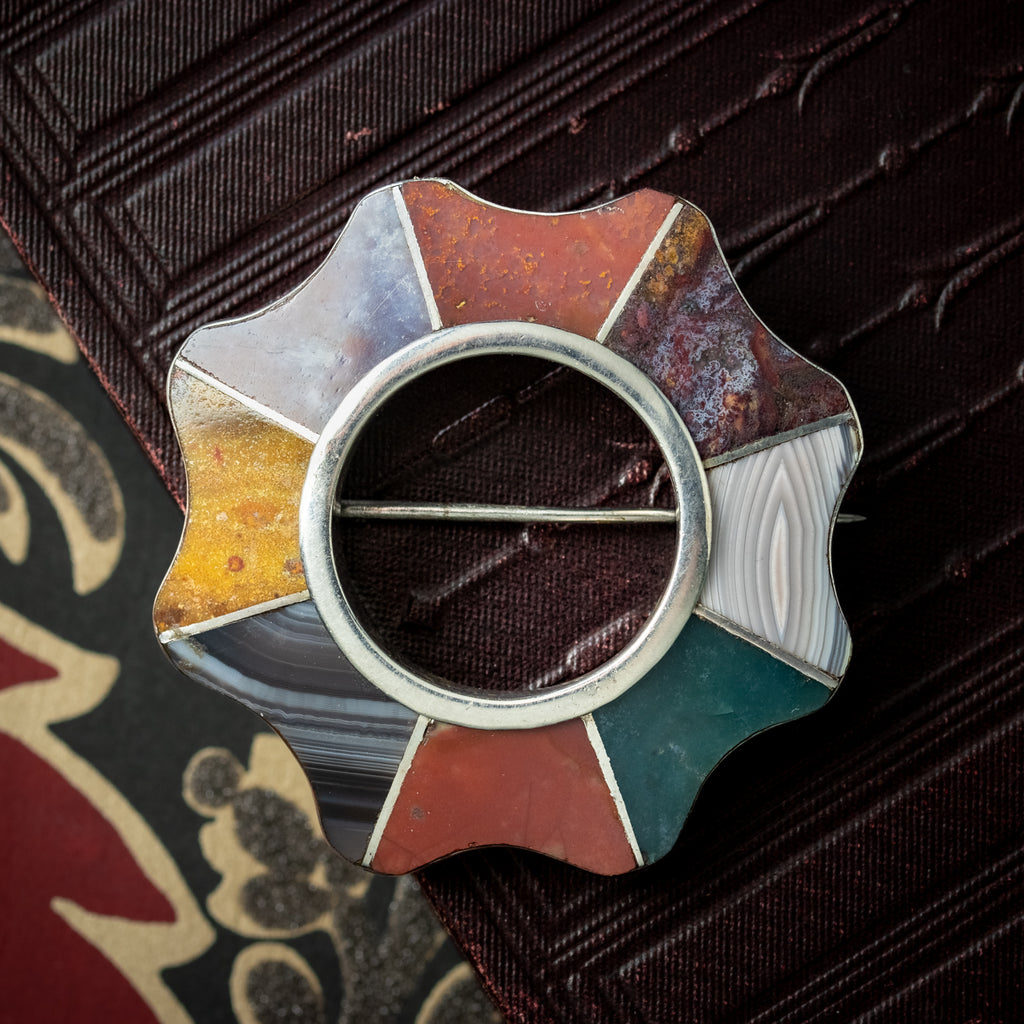
Agate is a banded or swirled variety of quartz found on every continent, and is widely considered the most varied gemstone in terms of colour and pattern.
What are the key characteristics of Agate?
Agate is a variety of Chalcedony characterised by its fine grain and distinctive banded patterns formed through layers of silica deposition. It typically occurs in a wide range of colours and is known for its hardness, durability, and smooth, waxy lustre when polished.
What types of Agate exist?
Agate is arguably the most varied gemstone of all. There are dozens of types of agate with strange and unique combinations of colours and patterns. This has earned agate the nickname “The Earth Rainbow”.
Where is Agate found?
Agate can be found on every continent on earth, and every culture has worked the stone into magnificent pieces of jewellery. The stone is relatively easy to work with, so has been carved into a myriad of shapes with simple tools.
What makes Scottish Agate jewellery special?
One of the most desirable forms of antique agate jewellery in the western world originated in Scotland. Predominantly worked into silver, these pieces contain large, smoothly cut pieces of agate showing off their bands or swirls of different colours.
View our collection of Agate jewellery.
What is Aquamarine and Why is It Valuable?
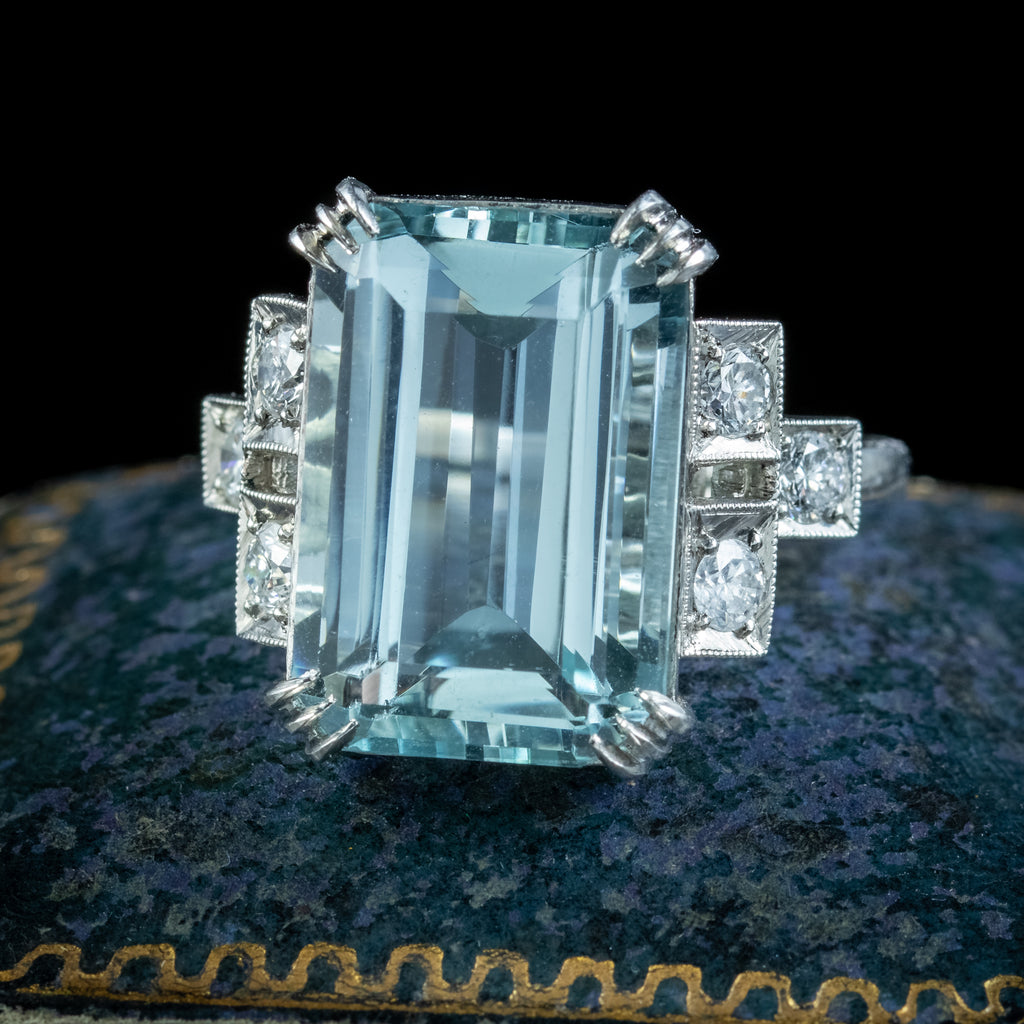
Aquamarine is a blue to blue-green gemstone and a variety of the mineral beryl - the same mineral family that produces emerald - prized for its clarity and cool oceanic colour.
What are the key characteristics of Aquamarine?
Aquamarine is a variety of the mineral beryl, typically recognised for its pale blue to blue-green colour caused by trace amounts of iron. It has excellent transparency, a vitreous (glassy) lustre, and good hardness (7.5–8 on the Mohs scale), making it durable and well-suited for fine jewellery.
How is Aquamarine related to Emerald?
Aquamarine and emerald are both varieties of the mineral beryl, with trace elements determining their colour. Aquamarine is typically cut to emphasise clarity, with the emerald cut often used to enhance its transparency and internal structure.
What does gem-quality Aquamarine look like?
Gem-quality aquamarines are free from inclusions, the tiny fissures within stones, and can have a green-blue or sky blue tint. Historically greener stones were more valued in the east and bluer stones in the west.
Why was Aquamarine so popular in the Art Deco period?
View our collection of Aquamarine jewellery.
What is Amethyst and Was It Ever a Precious Stone?
Amethyst is a purple variety of quartz that was once ranked among the most precious gemstones in the world, historically grouped alongside Diamonds, Rubies, Sapphires and Emeralds as one of the five Cardinal Gemstones.

What are the key characteristics of Amethyst?
Amethyst is a purple variety of Quartz, with its colour ranging from pale lavender to deep violet due to iron impurities and natural irradiation within the crystal structure. It has a vitreous lustre, good clarity in high-quality specimens, and a hardness of 7 on the Mohs scale, making it durable and widely used in jewellery.
What are the Cardinal Gemstones?
This beautiful purple stone was once ranked alongside the “big four” in terms of value. Together these five stones were known as the Cardinal Gemstones. Amethyst was treated with the same care and attention as the others, and adorns some truly wonderful pieces of antique and vintage jewellery.
Why did Amethyst lose its precious stone status?
In the early 19th century large reserves of amethyst were found in Brazil, and as gem-quality specimens became more numerous its value lessened. Amethyst is still a beautiful stone, and well suited for use in jewellery, but modern stones are considerably more affordable than they were.
View our collection of amethyst jewellery
What is Carnelian and Why Was It Used for Seals?
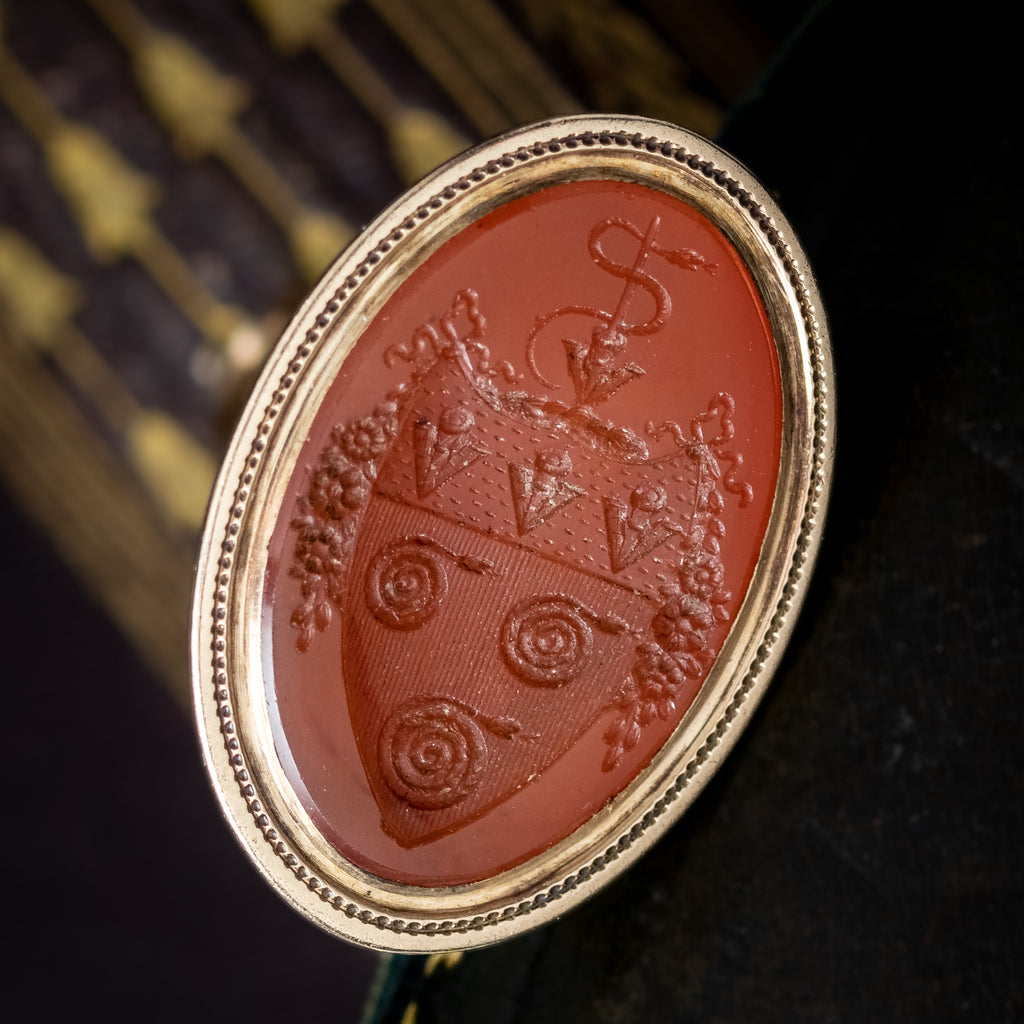
Carnelian is a red-orange semi-precious stone with one of the longest histories of use in jewellery, dating back to the early Stone Age, and is particularly valued for its hardness and fine-grained texture that allows detailed carving.
What are the key characteristics of Carnelian?
Carnelian is a translucent to opaque variety of chalcedony (a form of microcrystalline quartz) known for its warm reddish-orange to brownish-red coloration caused by iron oxide impurities. It has a smooth, waxy to vitreous lustre, a hardness of about 6.5–7 on the Mohs scale, and is valued for its durability and ease of carving, making it popular in both ancient intaglios and modern ornamental jewellery.
How old is Carnelian's use in jewellery?
This red-orange stone has been formed into beaded jewellery since the early stone age, making its use in jewellery about as old as agriculture. It is extremely fine grained and hard-wearing, and comes in an even harder, darker form known as sard.
Why was Carnelian ideal for making seals?
Carnelian can be carved into extremely detailed and elaborate patterns, which made it extremely well suited to the creation of seals, which were embedding into rings and fobs to make wax impressions in official documents.
Some pieces of carnelian jewellery can be of high historical importance, depending on whose crest they bear.
View our collection of Carnelian jewellery.
What is Chalcedony and Which Gemstones Are Related to It?
Chalcedony is a microcrystalline form of Quartz that forms the basis for many gemstones, including Agate, Carnelian, Onyx and Bloodstone. In its own right, it appears as a waxy, mildly translucent green or white stone used widely in jewellery.

What are the key characteristics of Chalcedony?
Chalcedony is a microcrystalline form of Quartz composed of intergrown microscopic quartz crystals, giving it a smooth, compact structure rather than visible grains. It typically has a waxy to vitreous lustre, a hardness of about 6.5–7 on the Mohs scale, and occurs in a wide range of colours, often forming the basis for many banded and varietal stones like agate and carnelian.
Which gemstones are forms of Chalcedony?
Many semi-precious gemstones are forms of Chalcedony, including Agate, Bloodstone, Carnelian and Onyx. The difference in these stones are caused by minor chemical differences, which can cause radically different colours and patterns.
What does Chalcedony look like on its own?
Where Chalcedony is described as such in jewellery it tends to be in its green or white variety, which is a waxy, mildly translucent stone that is often carved into unique shapes. Most varieties of Chalcedony take well to carving and are tough enough to hold their form, making Chalcedony jewellery some of the most varied and interesting pieces.
View our collection of Chalcedony jewellery.
What is Citrine and Why Was It Popular With Queen Victoria?
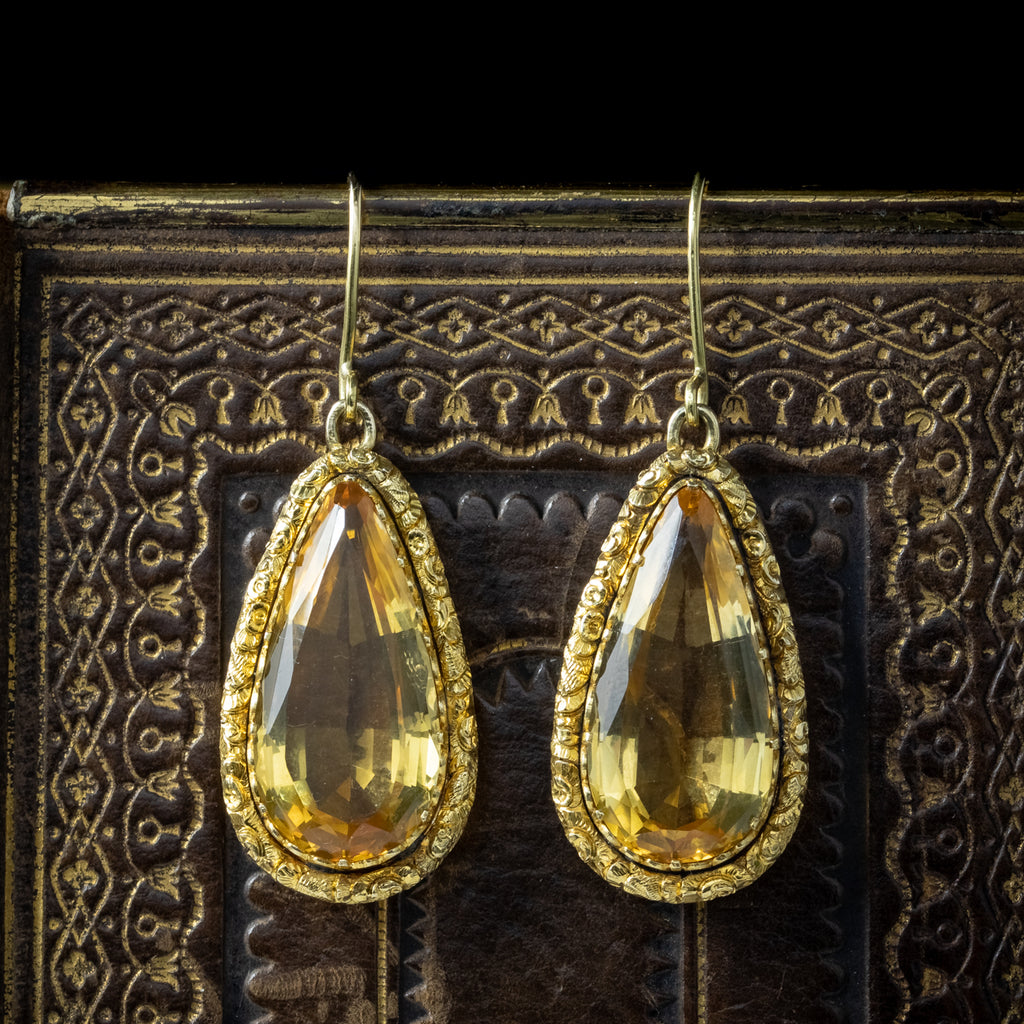
Citrine is a honey-golden variety of Quartz closely related to amethyst, and was a favourite gemstone of Queen Victoria, making it a common find in antique Victorian jewellery.
What are the key characteristics of Citrine?
Citrine is a yellow to golden-orange variety of Quartz, with its colour typically resulting from trace amounts of iron and, in many modern stones, heat treatment of Amethyst or smoky Quartz. It has a vitreous lustre, good transparency in high-quality specimens, and a hardness of 7 on the Mohs scale, making it durable and suitable for everyday jewellery use.
How is Citrine related to Amethyst?
This honey-golden gemstone was a favourite of Queen Victoria and can be found in many pieces of Victorian jewellery. It is an almost identical mineral to amethyst, but is formed in higher temperatures. It is actually possible to transform an Amethyst into a form of Citrine by exposing it to extreme heat.
In some places where Citrine is found the heat which formed it has not affected the stone uniformly, leading to crystals which are purple on one side and golden yellow on the other - This is known as ametrine.
View our collection of Citrine jewellery and Citrine antique engagement rings.
What is Garnet and What Colours Does It Come in?
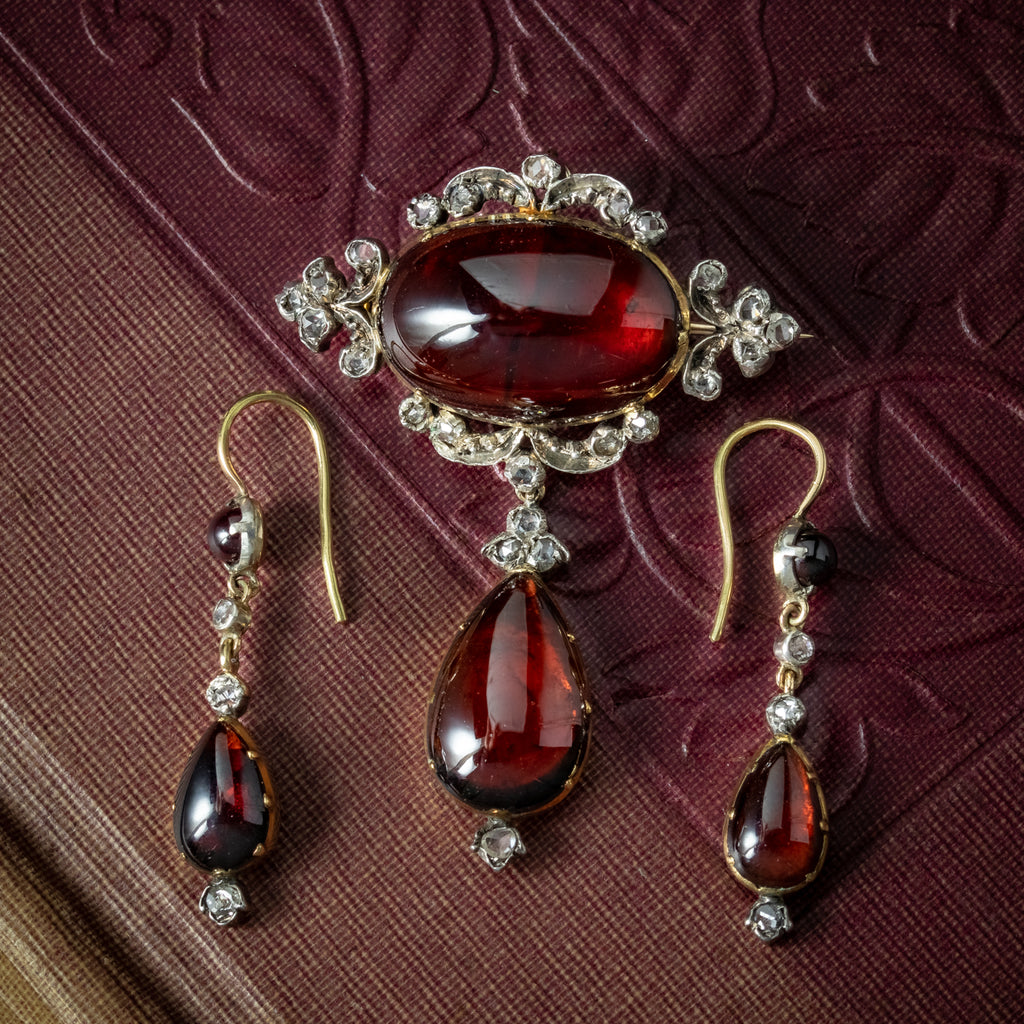
Garnet is a hard, deep crimson gemstone used in jewellery since the Bronze Age, most commonly found in red but also available in green and - extremely rarely - blue varieties.
What are the key characteristics of Garnet?
Garnet is actually a group of closely related silicate minerals rather than a single species, most commonly recognised for its deep red coloration, though it can occur in a wide spectrum of colours except blue. It typically has a vitreous lustre, high refractive index that gives it strong brilliance, and a hardness of about 6.5–7.5 on the Mohs scale, making it durable and widely used in both historical and modern jewellery.
What colours does Garnet come in?
Garnet is a deep crimson crystal gemstone which has been used in jewellery since the bronze age. Although red is the most common form of garnet it can be found in green, and extremely rare blue varieties.
It is an extremely hard material, making it ideally suited to use in jewellery, but it has also historically been used to craft tools used in abrasion.
When was Garnet most popular in jewellery?
View our collection of Garnet jewellery.
What is Jade and Why is It So Prized in Chinese History?
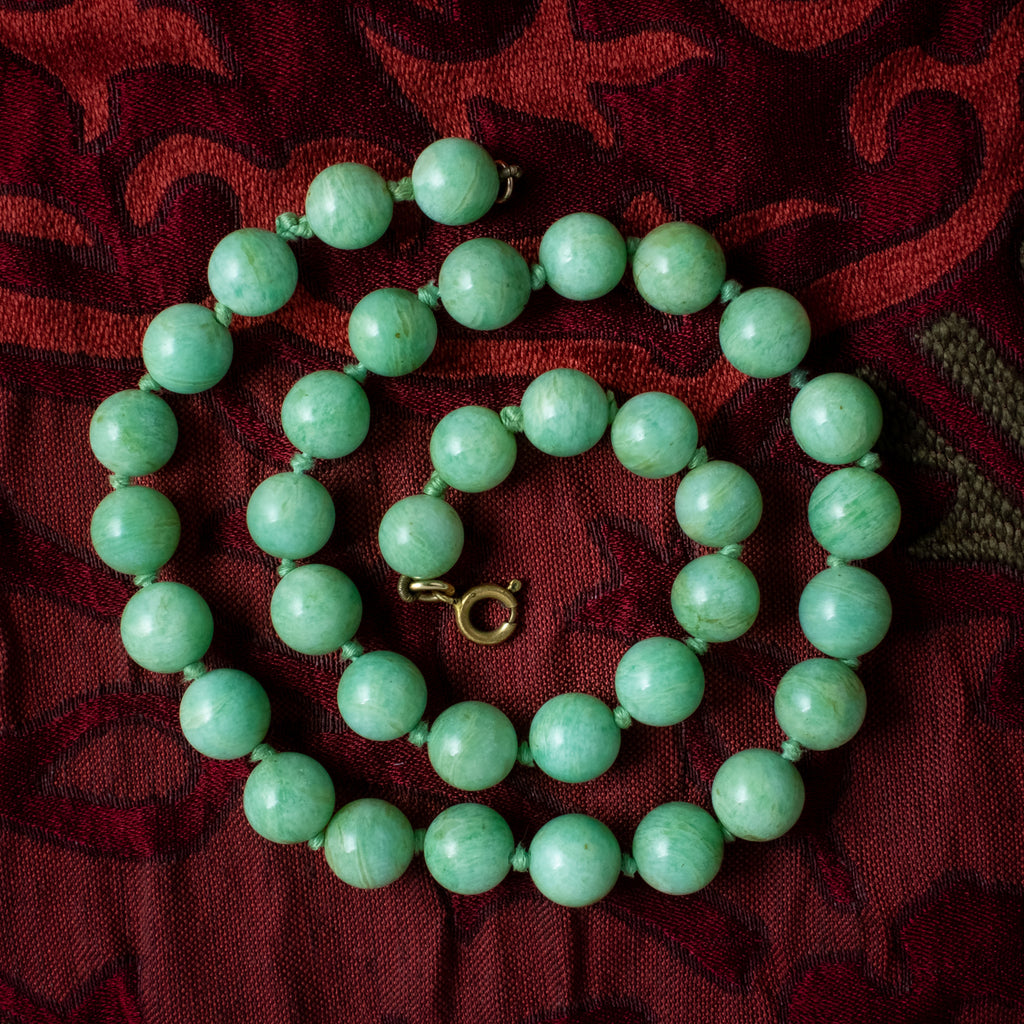
Jade is an exceptionally fine-grained pale green stone with deep cultural significance in China, where it was historically associated with the Emperor, and is prized for its translucent lustre and capacity for intricate carving.
What are the key characteristics of Jade?
Jade refers to two distinct minerals - Nephrite and Jadeite - both prized for their toughness rather than hardness, allowing them to be intricately carved without breaking easily. It typically appears in shades of green (though it can also be white, lavender, yellow, or black), with a smooth, often waxy to vitreous lustre, and has been highly valued in many cultures, particularly in East Asia, for both ornamental and symbolic purposes.
Why is Jade associated with Chinese culture?
This pale green gemstone is extraordinarily fine-grained, meaning that it can take incredibly detailed carving. Many of the most wondrous pieces of jade jewellery and ornaments come from China, where it was associated with the Emperor and held great value.
What colours does Jade come in?
Jade has a translucent lustre that makes it appear slightly otherworldly. Its colour can vary, and some types of jade are banded with multiple different hues. Although green jade is most common there are types which show every colour of the rainbow, in addition to black and white.
View our collection of Jade jewellery.
What is Moonstone and What Gives It Its Glow?
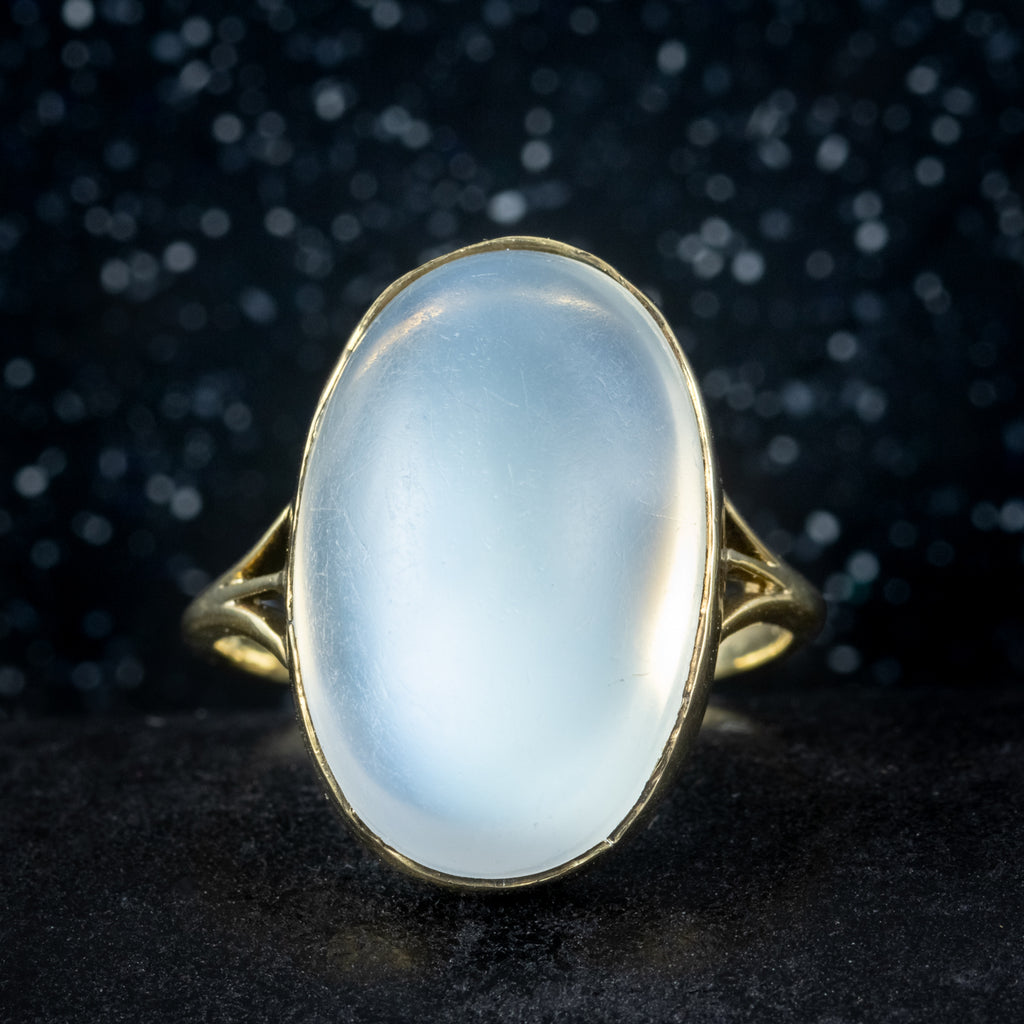
Moonstone is a gemstone in the feldspar family recognised for its distinctive pearly, floating glow - an optical effect called adularescence - which historically led people to believe the stone was made from solidified moonlight.
What are the key characteristics of Moonstone?
Moonstone is a variety of feldspar known for its distinctive adularescence, a soft, glowing optical effect that appears to float across the surface as light moves through the stone. It typically ranges from colourless to white, grey, peach, or blue tones, has a Mohs hardness of about 6–6.5, and is valued in jewellery for its ethereal sheen and subtle, shifting appearance.
What causes Moonstone's glow?
These ethereal stones were once believed to be solidified moonlight, which is understandable given their unique reaction to light. They are usually cut en cabochon, which allows their pearly schiller to truly shine.
What symbolism is associated with Moonstone jewellery?
Being associated with the moon jewellery inlaid with moonstones tends to be overtly feminine, as the moon has long been associated with benevolent goddesses like the Greek deities Luna, Diana and Hecate.
View our collection of Moonstone jewellery.
What is Opal and Why Does It Show So Many Colours?
Opal is a gemstone renowned for displaying a shifting play of colour - known as opalescence - caused by internal microscopic structures that diffract light differently depending on the viewing angle.

What are the key characteristics of Opal?
Opal is a hydrated amorphous form of silica known for its unique play-of-colour, where flashes of spectral hues appear as light diffracts through its internal structure. It occurs in a wide range of body colours from white and black to translucent or milky tones, has a relatively low hardness of about 5–6.5 on the Mohs scale, and is prized in jewellery for its iridescent, ever-changing appearance.
What causes opalescence?
Opals displays what is arguably the most elaborate lustre of any gemstone. Every Opal contains an array of cloud-like formations within it that catch the light in different ways. This means that when an Opal is moved it displays bright nebulae of shimmering colours that can be starkly different from the colour of the host stone.
What are the different types of Opal?
There are many different forms of Opal, including the bright orange fire Opal and the dark black Opal, but the most commonly used in jewellery are light blue with flashes of green, orange and red within them.
View our collection of Opal jewellery.
What is Paste Stone Jewellery and is It Valuable?
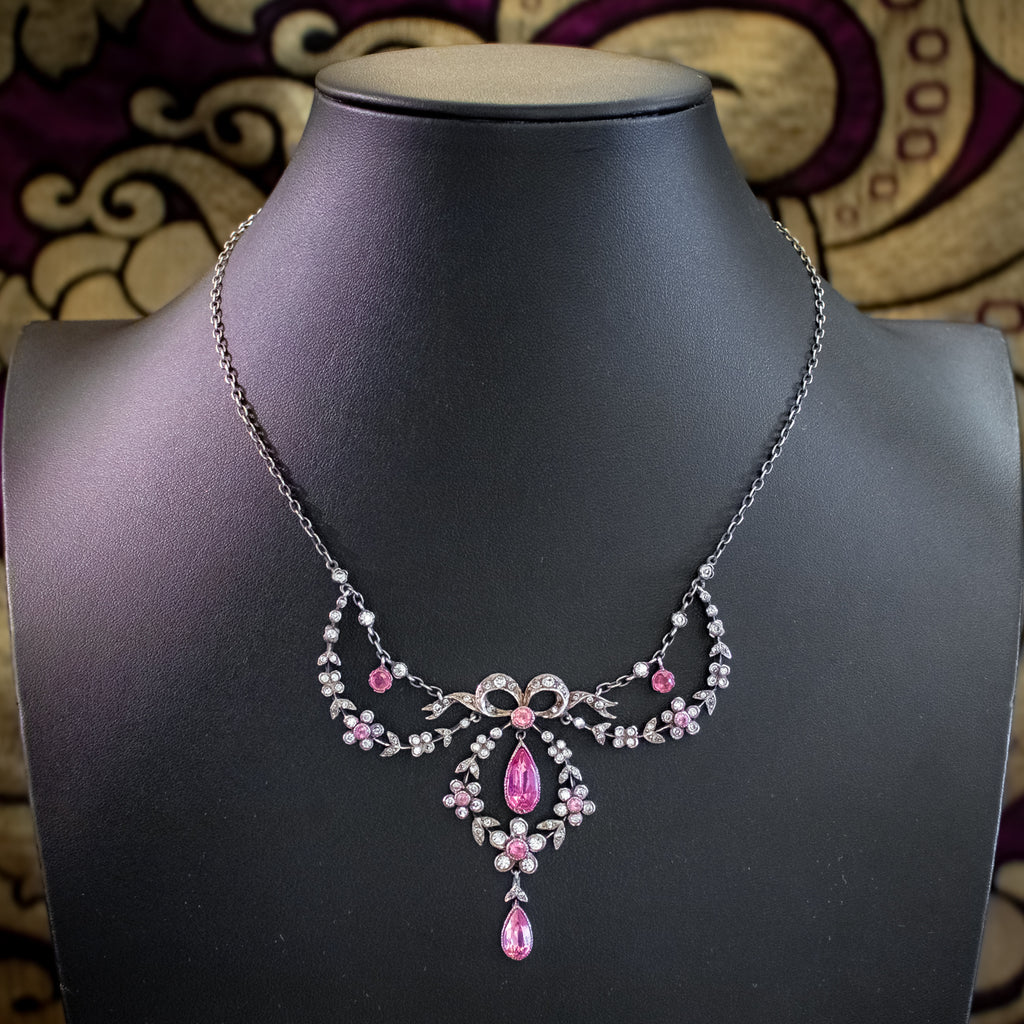
Paste jewellery refers to pieces set with hand-crafted glass stones - made from heavy flint glass - that are cut and faceted to simulate the appearance of genuine gemstones, and are collected today as fine examples of period craftsmanship in their own right.
What are the key characteristics of Paste?
Paste is a type of leaded glass that was historically used as an imitation gemstone material, valued for its ability to closely mimic the brilliance and dispersion of diamonds and other precious stones. It is typically colourless or tinted, has a relatively low hardness compared to natural gemstones, and was especially popular in 18th- and 19th-century jewellery for creating affordable yet highly decorative pieces.
How is Paste stone made?
Simulated gemstones formed from heavy flint glass, Paste stone has been crafted since ancient times and requires tremendous skill to create. The name comes from the process of creating it, where a Paste is formed and left to cool before being faceted and shaped like a true gemstone.
Is antique Paste jewellery worth collecting?
Paste stones sparkle like true gems, and can be made in any colour imaginable. Pieces of Paste jewellery from every era can be found, and in many cases these pieces are just as valuable as more typical jewellery.
Modern simulated gemstones tend to use more advanced processes, so the use of Paste as a counterfeit has mostly ceased. Nowadays it is valued on its own merit as an example of the craftsmanship of a particular era.
View our collection of Paste jewellery.
What Are Pearls and How Are They Formed?
Pearls are organic gemstones formed naturally inside marine creatures such as oysters and clams, built up from layers of nacre around an irritant to create a smooth, lustrous surface that is unique among gemstones.

What are the key characteristics of Pearls?
Pearls are organic gemstones formed within the soft tissue of molluscs such as oysters and mussels as a layered response to an irritant, composed primarily of calcium carbonate in the form of nacre. They are prized for their natural lustre (orient), smooth rounded shapes, and soft iridescence, with colours ranging from white and cream to pink, grey, black, and gold depending on the species and environment.
How do Pearls form naturally?
Pearls are created within the bodies of marine creatures such as oysters and clams. They are formed from a substance called Nacre, which is repeatedly layered around an irritant so that a smooth, tough outer surface forms. The surface of a Pearl is composed of many semi-translucent layers which form a shimmering effect that is unique and highly desirable.
What is the difference between antique and cultured Pearls?
All genuine Pearls must form within a living creature, but is now possible to culture Pearls in a form of underwater farming. Antique Pearls often had to be found and gathered in the wild, without the benefit of modern technology, and are thus much more valuable.
View our collection of Pearl jewellery or antique pearl engagement rings.
What is Peridot and Where Does It Come From?
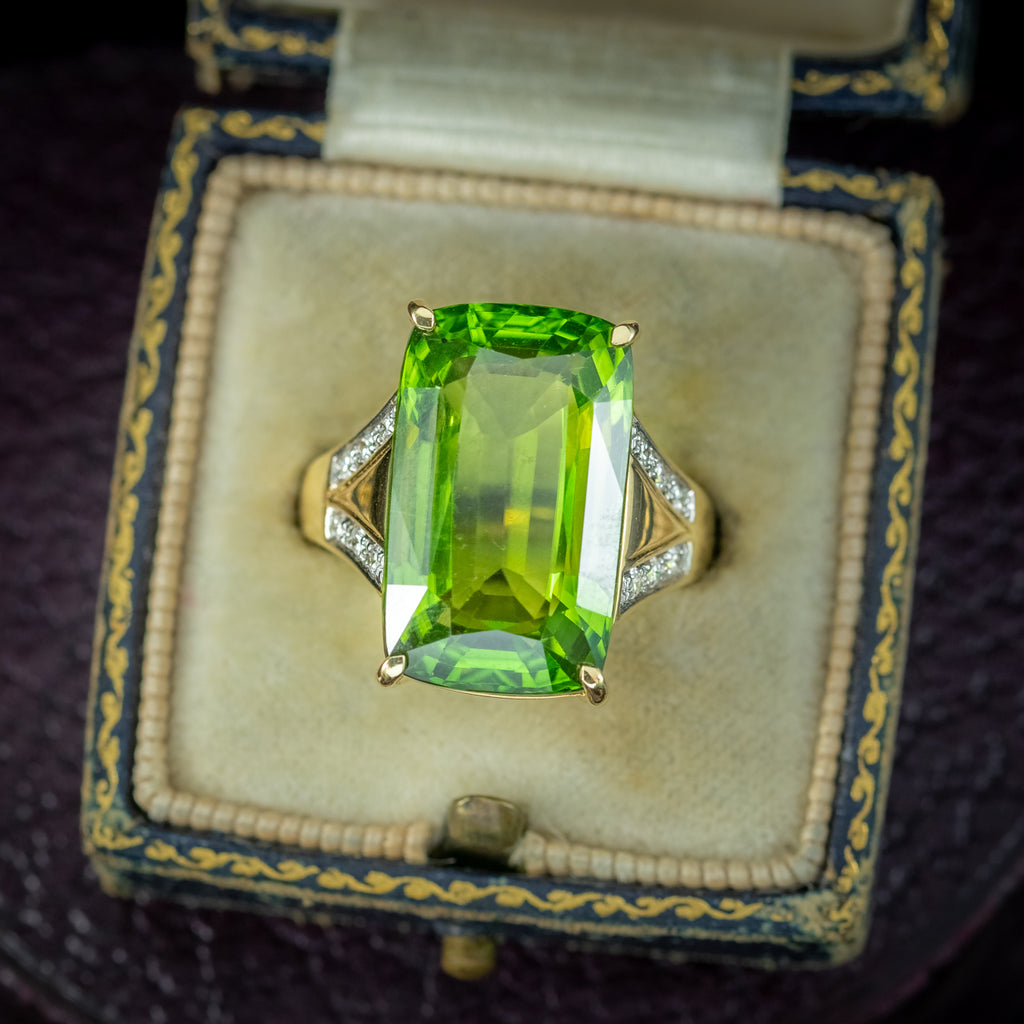
Peridot is a bright, lime-green gemstone and one of the few that occurs in only a single colour, making it immediately recognisable - and unusually, it has also been found inside meteorites that have struck the earth.
What are the key characteristics of Peridot?
Peridot is the gem-quality variety of the mineral olivine, typically characterised by its distinctive olive-green colour, which is caused by iron within its crystal structure rather than impurities. It has a vitreous lustre, a hardness of about 6.5–7 on the Mohs scale, and is often found in volcanic rocks and even in some meteorites, making it notable among gemstones for its extraterrestrial occurrence.
What makes Peridot unusual among gemstones?
Peridot is a bright green stone which is often included in antique Suffragette jewellery. It was known as the “Evening Emerald” and gem-quality specimens are clear, free from inclusions, and sparkle magnificently when faceted by a skilled lapidary.
What is Suffragette jewellery and why does it include Peridot?
The stone is rare amongst gems in that it only appears in one colour, with very little variation from stone to stone. It is also relatively rare, as it can be damaged by long exposure to the elements, so must be excavated with care. It has also been found within meteorites which have struck the earth - adding to its appeal.
View our collection of Peridot jewellery.
What is Spinel and Why is It Often Mistaken for Ruby?
Spinel is a hard, brilliantly coloured gemstone that has historically been mistaken for Ruby and Sapphire - including several famous stones set within European royal crown jewels - and is in fact slightly harder than both.
What are the key characteristics of Spinel?
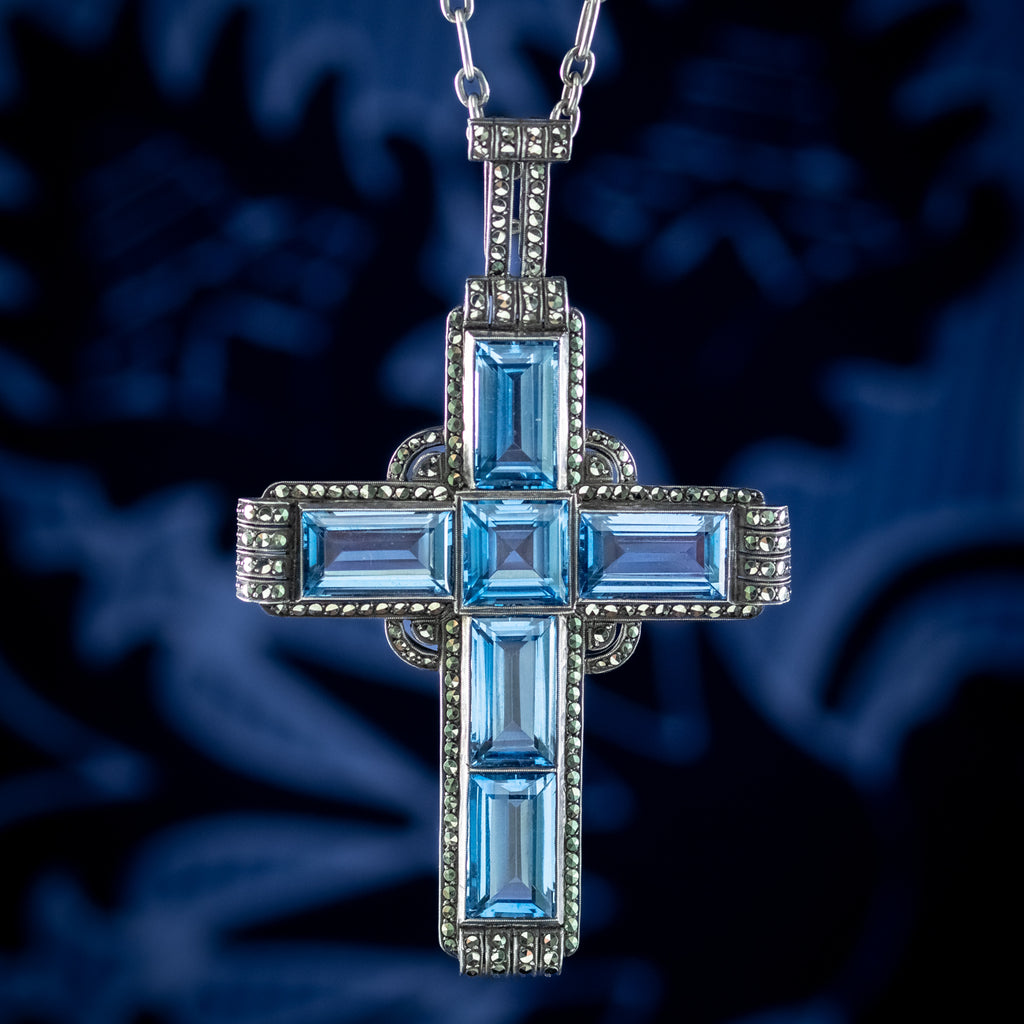
Spinel is a magnesium aluminium oxide mineral known for its wide range of vivid colours, including red, pink, blue, purple, and black, with the most famous historically being mistaken for Ruby. It has a vitreous lustre, excellent clarity and brilliance, and a hardness of about 7.5–8 on the Mohs scale, making it durable and highly suitable for fine jewellery.
What is the most famous example of Spinel mistaken for ruby?
This interesting gemstone has a long history of being mistaken for other precious stones. Some of the largest and most impressive Rubies in the world, even those contained within the Crown Jewels of many monarchies, have later been discovered to be particularly beautiful spinels instead.
What makes Spinel a good choice for jewellery?
Spinels can be found in a great variety of colours, and they are actually a little harder than the Rubies and Sapphires they are so often mistaken for, making them ideal stones for fashioning into jewellery.
View our collection of Spinel jewellery.
What is Topaz and What Colours is It Available in?
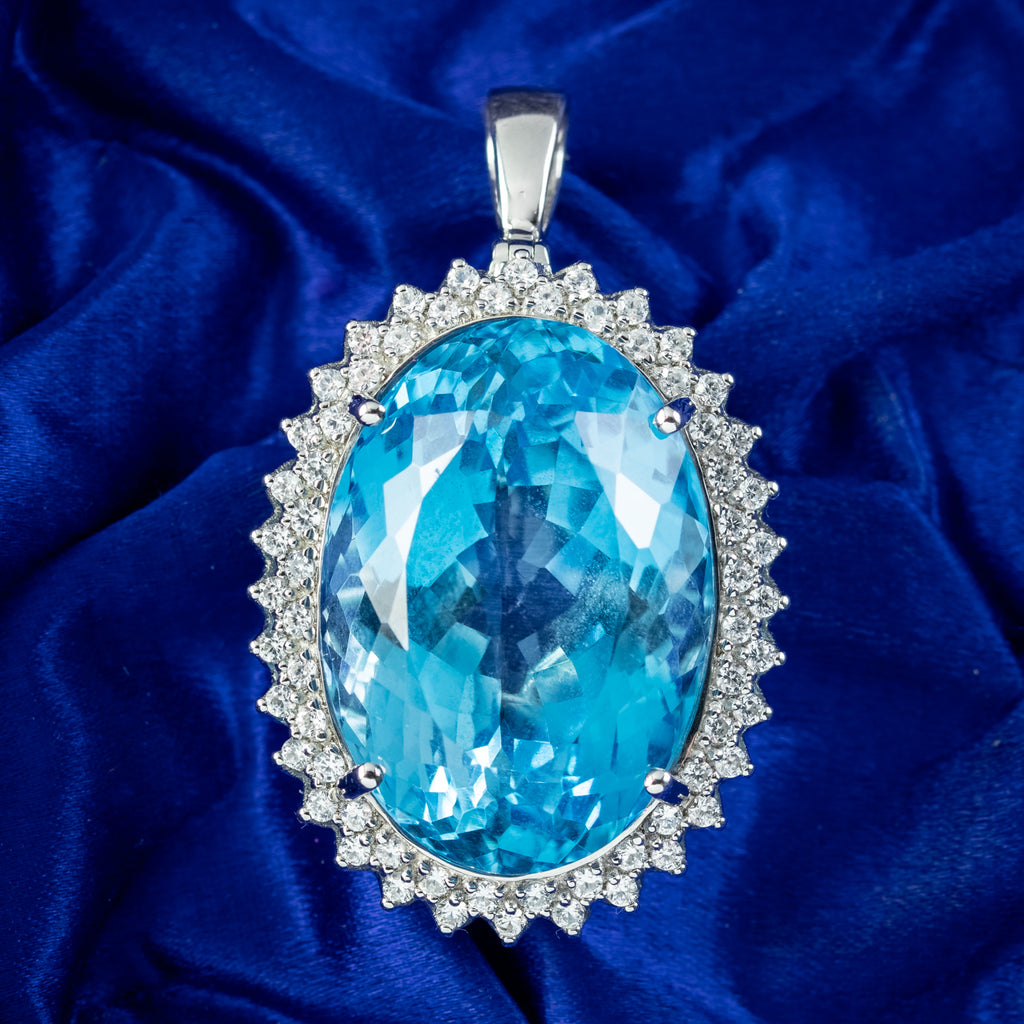
Topaz is a transparent gemstone available in a wide range of colours - with golden "precious topaz" and pale blue being the most sought after - and is hard enough to perform well in all styles of jewellery setting.
What are the key characteristics of Topaz?
Topaz is a silicate mineral typically found in colours ranging from colourless and pale blue to yellow, orange, pink, and brown, with the most prized natural shades often enhanced or produced by treatment. It has a vitreous lustre, perfect cleavage (making it relatively fragile despite a high hardness of 8 on the Mohs scale), and is valued in jewellery for its brilliance and wide colour variety.
What are the most valuable colours of Topaz?
Topaz is a transparent and relatively abundant gemstone which can be found in a wide variety of different colours. The most valuable and highly prized Topazes are the golden “precious Topaz” and a pale blue variant, although any Topaz is hard enough to perform well in jewellery, and sparkle beautifully when cleverly cut.
How was Topaz used in antique jewellery?
Topaz takes well to heat and radiation treatment, which can alter its colour and composition, but gem quality specimens in antique jewellery were very rare and the pieces which contain them were crafted using the same care and attention reserved for the most precious of stones.
View our collection of Topaz jewellery.
What is Tourmaline and What Makes It Unusual?
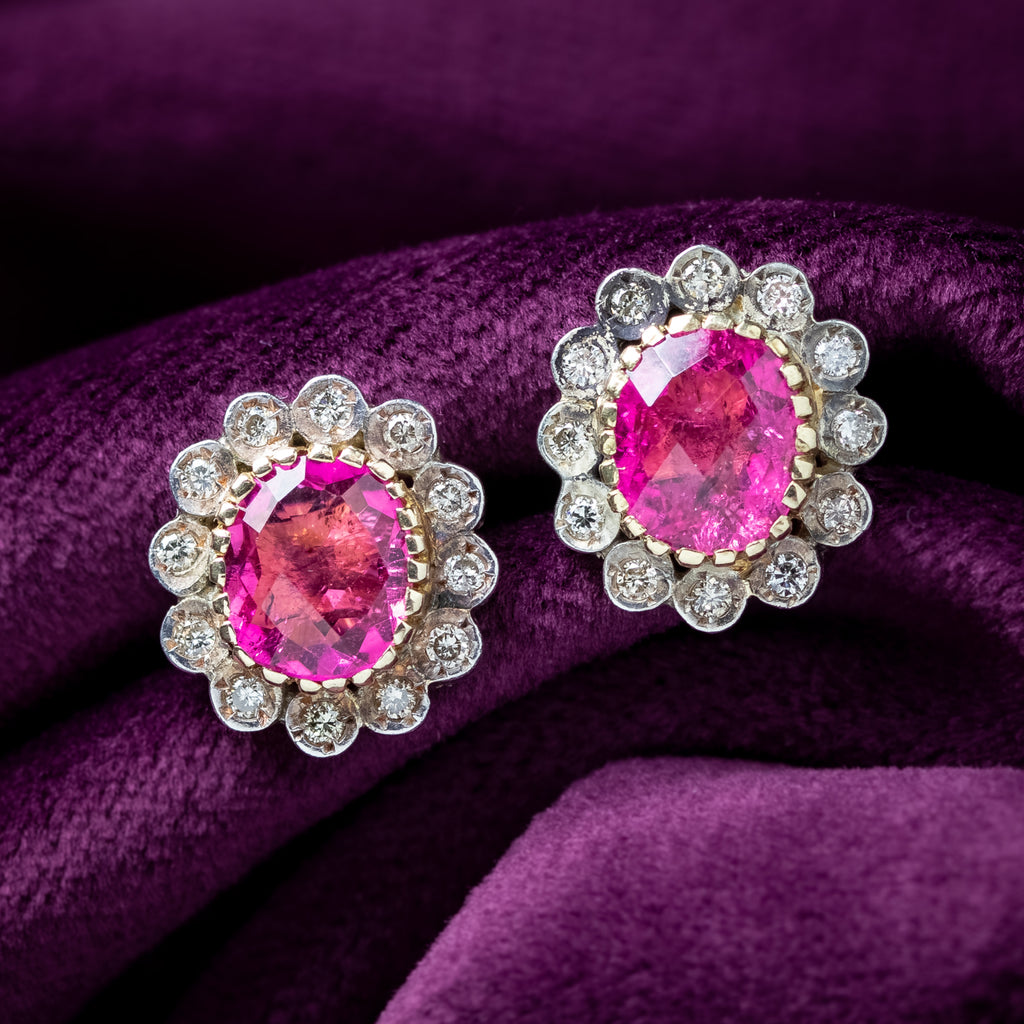
Tourmaline is a gemstone that comes in a wider range of colours than almost any other mineral, from black to vivid pink, green and multi-banded varieties, and has the unusual property of becoming magnetic when heated.
What are the key characteristics of Tourmaline?
Tourmaline is a complex borosilicate mineral group known for its remarkable range of colours, including black, green, pink, red, blue, and multicoloured varieties such as watermelon Tourmaline. It has a vitreous lustre, strong pleochroism (showing different colours from different angles), and a hardness of about 7–7.5 on the Mohs scale, making it durable and highly versatile in jewellery.
What colours does Tourmaline come in?
This gemstone is most commonly black, but varieties can be found in a great array of different colours, and many specimens show bands of multiple different hues.
What are the unusual properties of Tourmaline?
Tourmaline polarizes light, creating beautiful displays when faceted. It also exhibits strange pyroelectric properties which causes it to become magnetic when heated, making it unsuitable for heat treatment. This means that Tourmaline on the market shows it original, natural colour.
View our collection of Tourmaline jewellery.
What is Zircon and How Does It Compare to Diamond?
Zircon is a naturally occurring mineral found widely in the earth's crust, valued as a gemstone in its clear or pale blue forms for its exceptionally high refractive index, which gives it a Diamond-like sparkle when cut correctly.

What are the key characteristics of Zircon?
Zircon is a Zirconium Silicate mineral known for its high brilliance and strong fire (dispersion), which can make well-cut stones resemble Diamonds at first glance. It occurs in a range of colours - including colourless, blue, yellow, brown, and red - has a vitreous lustre, and a hardness of about 6–7.5 on the Mohs scale, though it can be somewhat brittle due to internal crystal structure and cleavage.
What makes gem-quality Zircon valuable?
This mineral is common in the crust of the earth, but most zircon is unsuitable for jewellery as it is mainly found in a slightly unattractive reddish brown colour resembling rust. It is only the pale blue or completely clear transparent varieties which are valued as a gemstone. These stones have a high refractive index, making them sparkle like diamonds when cut correctly.
How does Zircon compare to diamond in hardness and weight?
Zircon is significantly softer than diamond, scoring around 6–7.5 on the Mohs hardness scale compared to diamond’s 10, meaning it is more prone to scratching and wear over time. However, zircon has a higher specific gravity than diamond, so it is denser and therefore heavier when comparing stones of the same size. This means a Zircon can feel noticeably weightier than a diamond of equal dimensions, even though it is less hard.
View our collection of Zircon jewellery.
If you have any questions about the pieces which we sell feel free to get in touch on England: 0333 700 4500 or send us an email via enquiries@antiquejewellerygroup.com. Our team is always happy to help!
What Are the Most Common Questions About Semi-precious Stones?
Valuable semi-precious stones include Spinel, Paraíba Tourmaline, Tsavorite and demantoid Garnet, imperial Topaz, Jadeite, black Opal, and Alexandrite. Despite the label, their rarity, colour, and optical effects can make them as valuable as precious gems like Sapphire or Ruby.
